

Looking for Vegetables That Start With H? You might know horseradish or habanero, but the letter H includes a surprisingly wide range of vegetables from around the world. From root crops and leafy greens to peppers, beans, sea vegetables, and heirloom varieties, this guide brings them together in one easy-to-browse list. You’ll also learn how they’re used in cooking, what they taste like, and a few interesting facts along the way.
Quick Answer: Vegetables That Start With H
| Vegetable | Flavor | Best Use |
| Horseradish | Fiery, pungent | Sauces, condiments |
| Habanero | Fruity, very hot | Hot sauce, salsa |
| Hamburg Parsley | Earthy, herbal | Soups, stocks |
| Hairy Melon | Mild, sweet | Stir-fry, soup |
| Huauzontle | Earthy, spinach-like | Fritters, tamales |
| Hijiki | Briny, mineral | Rice dishes, salads |
| Hearts of Palm | Mild, artichoke-like | Salads, tacos |
| Haricot Bean | Creamy, mild | Soups, cassoulet |
| Hatch Chile | Smoky, medium hot | Roasting, salsas |
| Hyacinth Bean | Nutty, earthy | Curries, stews |
| Holy Basil | Spicy, clove-like | Thai stir-fries |
| Hopniss | Nutty, earthy | Roasting, stews |
Root Vegetables That Start With H
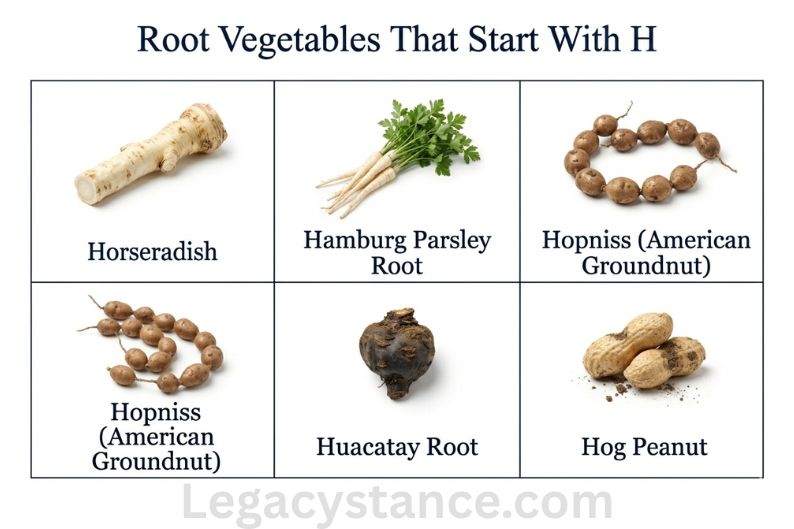
Horseradish A thick, white root in the mustard family. The heat only appears when the root is cut or grated — a compound called allyl isothiocyanate releases and travels up through the sinuses. Cooking destroys it entirely, which is why horseradish is almost always used raw.
- Grated into creamy sauce for roast beef and smoked fish
- Stirred into mashed potatoes
- Mixed into cocktail sauce for shrimp
- Pickled alongside beets in Eastern European tradition
Storage: Wrap unwashed in a damp paper towel, refrigerate up to three weeks. Once grated, use within a week or add vinegar to preserve pungency.
Fact: Smaller roots are hotter than large, thick ones.
Hamburg Parsley Root An old Central European root that looks like a slender white parsnip but tastes like concentrated parsley. Extremely common in Polish and German cooking, almost unknown in English-speaking countries. Both the root and the leaves are fully edible.
- Essential in German and Polish soup stocks
- Roasted alongside carrots and parsnips
- Grated raw into salads
- Leaves used exactly like flat-leaf parsley
Storage: Keep unwashed in the refrigerator up to two weeks.
Fact: In Poland, a broth without Hamburg parsley root is considered incomplete.
Hopniss (American Groundnut) A wild climbing plant native to North America. It produces small tubers in chains underground — sometimes a dozen connected together like beads on a string. Native Americans across eastern North America depended on it before European colonization.
- Boiled and eaten like small potatoes
- Roasted over fire
- Sliced and pan-fried
- Added to stews and soups
Storage: Cool, dark, dry place. Use within two weeks — does not keep as long as commercial potatoes.
Fact: When Pilgrims faced starvation in their first Massachusetts winter, hopniss was one of the survival foods that kept them alive.
Huacatay Root Related to the Peruvian black mint plant. The root is less commonly eaten than the herb but used in some traditional Andean cooking.
Hog Peanut A wild North American legume that produces two types of seeds — above-ground pods and below-ground peanut-like seeds. Both are edible. The underground seeds are richer and more flavorful.
Leafy Greens and Stem Vegetables That Start With H
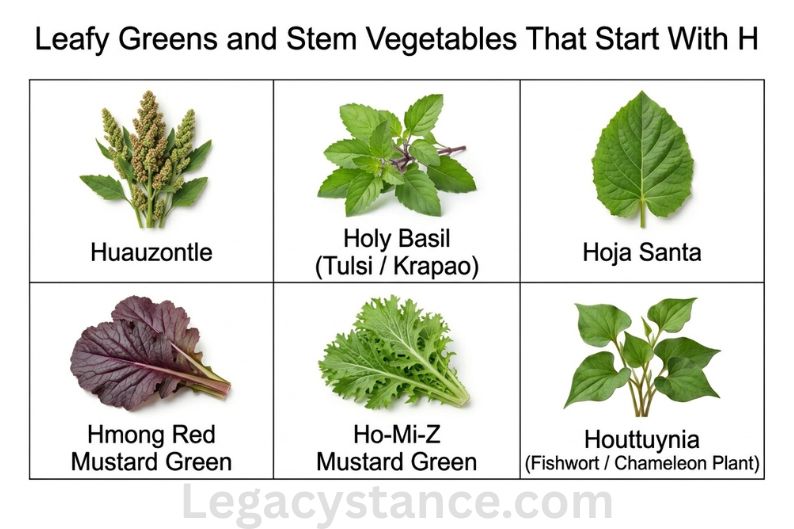
Huauzontle A Mexican vegetable with Aztec roots, related to quinoa and lamb’s-quarters. The edible part is the tightly packed seed-head cluster at the top of the plant. Earthy, slightly bitter, and far more complex than spinach.
- Stuffed with cheese, battered in egg, and fried — the classic preparation
- Boiled and served with salsa roja
- Used in tamales
- Sautéed with garlic as a side dish
Storage: Refrigerate up to five days. Found in Mexican markets in spring and early summer.
Fact: Spanish colonizers tried to suppress huauzontle because it held Aztec religious significance. It survived in rural Mexican cooking.
Holy Basil (Tulsi / Krapao) A variety of basil so different from sweet Italian basil they are barely comparable. The leaves are smaller with serrated edges, stems often purple. Flavor is spicy, clove-like, and slightly peppery — closer to anise than to salad basil.
- Pad krapao (Thai stir-fry with minced pork or chicken)
- Added to Thai curries at the end of cooking
- Used in Vietnamese soups
- Brewed into tea in Ayurvedic tradition
Storage: Keep stems in water at room temperature like cut flowers. Use within two days. Freezes reasonably well for cooking.
Fact: In Hindu tradition, the tulsi plant is considered sacred. Many Indian households grow it as part of a daily morning ritual.
Hoja Santa A large Mexican leaf — sometimes the size of a dinner plate — with a startling flavor: root beer and anise with a herbal green note. Used to wrap fish and tamales during steaming or grilling, transferring its flavor during cooking.
- Fish wrapped in hoja santa leaves and grilled
- Tamale wrapping for flavor infusion
- Chopped into sauces and mole verde
- Occasionally used raw as a small garnish
Storage: Fresh leaves wilt quickly. Use within two to three days. Keep refrigerated in a damp paper towel.
Fact: The flavor comes from safrole, the same compound that originally flavored root beer before it was banned for safety concerns in commercial production.
Hmong Red Mustard Green A Southeast Asian heirloom green with deep red-purple leaves. Peppery and slightly bitter raw, mellowing when cooked. Used widely in Hmong and Lao home cooking.
- Stir-fried with garlic and fish sauce
- Added to soups and noodle broths
- Pickled in vinegar brine
- Eaten raw in fresh salads
Ho-Mi-Z Mustard Green A Chinese mustard variety with frilly green leaves and a sharper flavor than common spinach. Used in stir-fries and soups.
Houttuynia (Fishwort / Chameleon Plant) Called “diếp cá” in Vietnamese and “dokudami” in Japanese. Has a sharp, polarizing flavor — often described as fishy and herbal simultaneously. Common across Southeast Asia and Japan as a fresh herb-vegetable.
- Eaten raw in Vietnamese fresh salads and spring rolls
- Added to Japanese pickles
- Used as a garnish in Korean cooking
Fact: People tend to either love or strongly dislike houttuynia. The taste is an acquired one.
Honewort A European wild green related to chervil. Mild, faintly anise-flavored young leaves eaten in spring.
Hakurei Turnip Greens The leafy tops of the Japanese salad turnip. Tender, mild, and slightly peppery. Fully edible.
- Quickly sautéed with butter or sesame oil
- Added raw to salads
- Stirred into miso soup
Hawthorn Shoots Young spring leaves and shoots of the hawthorn tree, eaten as a foraged green in parts of Europe and Asia.
Hana Nira (Flowering Garlic Chive) The flowering stem of garlic chives, harvested just before the buds open. More delicate than the leaves, with a light garlic-chive flavor.
- Stir-fried with eggs or pork
- Added to Japanese and Chinese dumplings
- Used as a garnish in East Asian cooking
Horsetail Shoots Young shoots of the Equisetum plant eaten in Japan (called “tsukushi”). Harvested in early spring, briefly boiled, then seasoned.
Gourds and Squash Vegetables That Start With H
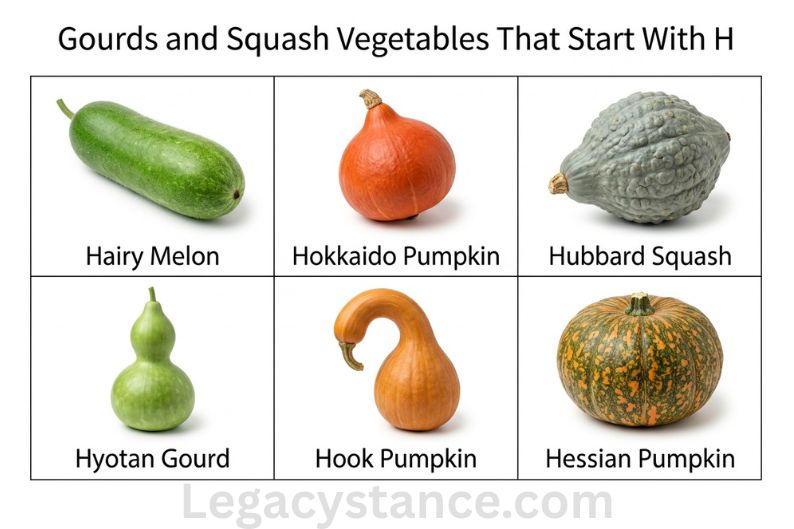
Hairy Melon (Fuzzy Melon / Mo Gwa) An immature wax gourd covered in fine white hairs. One of the most popular vegetables in Cantonese cooking. Very mild on its own — absorbs surrounding flavors completely.
- Cantonese soups with pork bones and glass noodles
- Stir-fried with garlic and oyster sauce
- Stuffed with minced meat or shrimp and steamed
- Added to congee for texture
Storage: Refrigerate up to one week. Do not peel until ready to cook.
Fact: The fine hairs disappear during cooking and require no removal beforehand.
Hokkaido Pumpkin (Red Kuri Squash) A small, teardrop-shaped Japanese pumpkin with red-orange skin and rich, chestnut-like flesh. Thin skin means no peeling required.
- Roasted whole in wedges
- Pureed into soups
- Stuffed and baked
- Used in Japanese tempura
Storage: Whole squash keeps in a cool, dark place for up to three months.
Fact: The skin, flesh, and seeds are all edible.
Hubbard Squash A very large, warty, blue-gray or green-orange winter squash. Dense, dry, sweet flesh. One of the oldest squash varieties in North American cooking.
- Roasted in large wedges
- Pureed into thick soup
- Used as a pie filling like pumpkin
- Cubed and added to stews
Storage: Whole Hubbard squash keeps for up to six months in a cool, dry location.
Fact: A full Hubbard squash can weigh anywhere from 5 to 20 kilograms.
Hyotan Gourd (Japanese Bottle Gourd) The immature form is eaten as a vegetable in Japan. Mild flavor, similar to hairy melon.
- Pickled as a traditional Japanese condiment
- Simmered in dashi and soy sauce
- Added to light soups
Hook Pumpkin An Italian heirloom variety with a distinctive curved neck. Dense flesh, used in Northern Italian cooking.
- Roasted and used in risotto
- Stuffed into fresh pasta as filling
- Baked in wedges
Hessian Pumpkin A German heirloom squash with dense, sweet flesh. Used in Central European soups and roasting.
Peppers Vegetables That Start With H
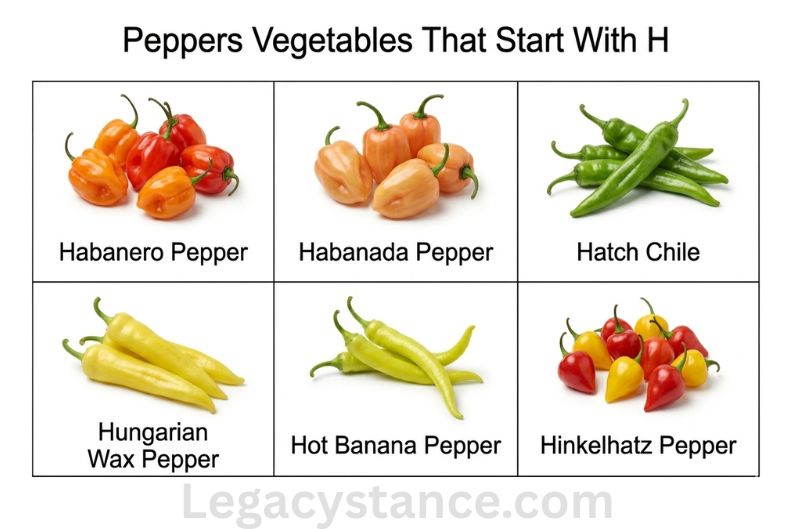
Habanero Pepper Small, lantern-shaped, typically orange when ripe. Distinctively fruity — notes of citrus and apricot — with extreme heat between 100,000 and 350,000 Scoville units.
- Hot sauces and salsas
- Marinades for jerk chicken
- Fruit-based chutneys
- Pickled in vinegar brine
Storage: Refrigerate up to two weeks. Freeze whole for up to one year.
Fact: The name means “from Havana” — but the pepper’s true origin is the Yucatan region of Mexico.
Habanada Pepper A genuine habanero with all capsaicin bred out. Same fruity tropical flavor, no heat whatsoever. Developed at Cornell University.
- Used anywhere you want habanero flavor without burning
- Fresh salsa and ceviche
- Raw in fruit salads
Hatch Chile Green chile grown exclusively in the Hatch Valley of New Mexico. Earthy, smoky, and grassy. Must be roasted to reach its full flavor.
- Roasted under a broiler or open flame, then peeled
- Green chile sauce for New Mexican cuisine
- Layered into cheeseburgers and sandwiches
- Stirred into soups and stews
Storage: Roasted chiles freeze for up to one year without significant flavor loss.
Fact: Every August and September, roadside roasters tumble fresh chiles in large wire drums across New Mexico. The smell travels for miles.
Hungarian Wax Pepper A long, yellow, mild-to-medium pepper. Waxy skin, crisp flesh, milder than a jalapeño.
- Pickled whole in vinegar
- Stuffed with cheese or meat and roasted
- Sliced raw into salads
- Added to goulash
Hot Banana Pepper Slender, yellow, curved pepper with moderate heat. Common in American Italian-style cooking.
- Pickled and served on sandwiches
- Sliced onto pizza
- Added to antipasto plates
Hinkelhatz Pepper A Pennsylvania Dutch heirloom. Small, drop-shaped, very hot. Used traditionally in Pennsylvania Dutch pickling.
- Pickled whole
- Dried and crushed as a spice
- Added to vinegar-based condiments
Holy Mole Pepper A dark poblano-type pepper grown for mole sauces. Thick flesh, deep flavor, mild-to-medium heat.
- Dried and used in mole negro
- Stuffed with cheese or meat and roasted
- Blended into chile sauces
Havasu Pepper A medium-heat orange pepper with fruity flavor. Used in Southwest American cooking.
Hatch Red Chile The dried red form of the Hatch green chile. Earthier and more concentrated than the fresh green version.
- Ground into red chile powder
- Cooked into red chile sauce
- Used in enchiladas and posole
Beans and Legumes Vegetables That Start With H
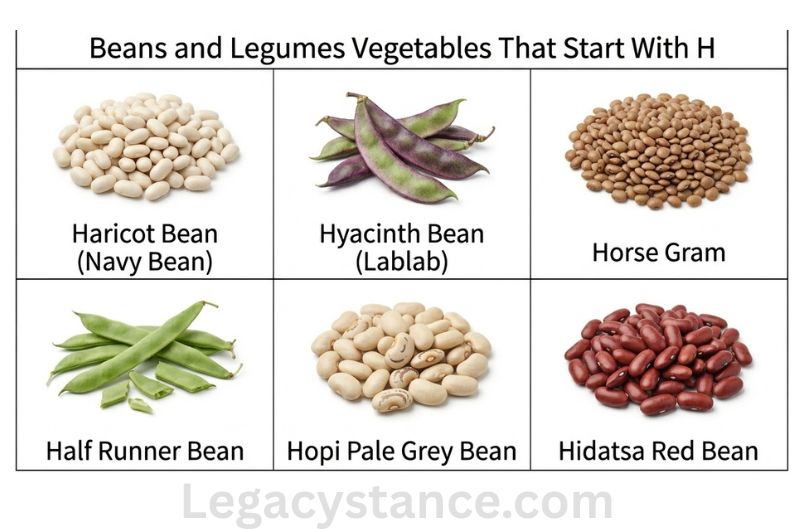
Haricot Bean (Navy Bean) Small, oval, creamy white bean. Mild, slightly nutty, and deeply absorbs surrounding flavors. Probably the most-consumed H vegetable by total volume globally.
- Slow-cooked in tomato sauce (British baked beans)
- French cassoulet with duck and pork
- Pureed into white bean dip
- Stirred into minestrone and ribollita
Storage: Dried beans keep one year in airtight storage. Cooked beans refrigerate for five days.
Fact: Heinz baked beans launched in Britain in 1901, originally marketed as an American product.
Hyacinth Bean (Lablab) A vigorous climbing legume grown across South Asia and East Africa. Purple or green flat pods with a distinctive curved tip. Raw beans contain harmful compounds — must always be cooked thoroughly.
- Curried in Indian dal preparations
- Young pods cooked like green beans
- Seeds slow-cooked in East African stews
- Boiled and stir-fried with aromatics
Storage: Fresh pods refrigerate up to five days. Dried seeds keep one year. Fact: Hyacinth bean is one of the most effective nitrogen-fixers in the legume family, valuable as both a food crop and a soil improvement plant.
Horse Gram A small, lens-shaped legume from South India. Drought-resistant and highly nutritious. One of the oldest cultivated legumes in the Indian subcontinent.
- Rasam (South Indian soup)
- Slow-cooked into thick dal
- Sprouted and eaten in salads
- Ground into flour for savory preparations
Half Runner Bean A cross between a bush bean and a pole bean. Popular in Appalachian cooking. Flat, stringy pods eaten whole when young.
- Slow-cooked with ham hock in traditional Appalachian style
- Canned whole for winter storage
- Boiled and dressed with butter
Hopi Pale Grey Bean A traditional Hopi Nation heirloom variety from the American Southwest. Creamy, mild flavor.
- Slow-cooked in soups
- Used in traditional Hopi stews
- Cooked with corn and squash in the traditional “Three Sisters” combination
Hidatsa Red Bean A Native American heirloom from the Hidatsa people of North Dakota. Deep brick-red color, earthy flavor.
- Cooked in traditional soups
- Baked beans preparation
- Mixed with corn in traditional dishes
Hidatsa Shield Figure Bean Another Hidatsa heirloom pole bean. Distinctive markings on the seed. Similar culinary use to the red variety.
Hutterite Soup Bean An heirloom bean from Hutterite communities. Creamy white, mild. Used specifically for thick soups.
Henderson’s Bush Lima Bean A small white lima variety. More delicate flavor than large limas.
- Succotash
- Butter bean soups
- Sautéed with herbs and olive oil
Hopi String Bean A Southwestern heirloom flat pod bean. Eaten young as a green bean.
Haricot Flageolet Bean A pale green heirloom French bean harvested before full maturity. More delicate and slightly sweet compared to dried white haricots.
- Classic accompaniment to roast lamb in French cooking
- Slow-cooked with herbs and garlic
- Pureed into elegant side dishes
Alliums Vegetables That Start With H
Hill Onion A clustered perennial onion found across South Asia. Grows in dense bunches rather than single bulbs. Mild, similar to shallots.
- Used raw in chutneys
- Pickled whole
- Cooked into South Asian curries
- Eaten raw alongside flatbreads
Hana Nira (also listed under leafy greens due to its stem-vegetable use) The flowering stem of garlic chives. A distinct ingredient from the leaf — more tender, lighter in flavor.
Turnips and Radishes Vegetables That Start With H
Hakurei Turnip A Japanese salad turnip eaten raw like an apple. Small, round, pure white, with thin skin that doesn’t need peeling. Mild, slightly sweet, almost fruity when fresh.
- Sliced thin and eaten raw with salt or light dressing
- Quick-pickled in rice vinegar
- Halved and roasted until caramelized
- Simmered briefly in dashi for a Japanese side dish
Storage: Refrigerate up to one week. Separate greens from roots — both keep better apart. Fact: Unlike most turnips, Hakurei has no bitterness. Children who dislike regular turnips often eat these without complaint.
Harukei Radish A mild Japanese spring radish. Less peppery than common radishes. Often eaten fresh.
- Sliced into salads
- Pickled
- Served with dipping sauces as a snack
Hilds Blauer Kohlrabi A blue-purple heirloom kohlrabi variety. Earthy and mildly sweet. Cooked or eaten raw.
- Peeled and sliced raw into sticks
- Roasted with olive oil
- Shredded into coleslaw
Sea Vegetables That Start With H
Hijiki A brown sea vegetable that turns black when dried. Has been part of Japanese cooking for at least 1,300 years. Strongly briny, mineral, and rich — absorbs soy sauce and mirin beautifully.
- Simmered with soy sauce, mirin, and dashi into a classic Japanese side dish
- Mixed into rice for onigiri
- Tossed with tofu and julienned carrots
- Added to bento boxes
Storage: Dried hijiki keeps over one year airtight. Soak 20 minutes minimum before cooking. Use immediately after rehydrating.
Fact: The UK Food Standards Agency advises limiting hijiki consumption due to naturally occurring inorganic arsenic. Japan and most of Asia continue to consume it regularly in moderate amounts.
Hawthorn Seaweed (Fucus) Edible coastal seaweed harvested along Atlantic and Pacific coastlines. Used in small amounts in coastal European and Japanese cooking.
Horsetail Kelp An edible Pacific coast kelp. Used in broths and occasionally eaten as a cooked green.
Wild and Foraged Vegetables That Start With H
Hedgehog Mushroom An edible wild mushroom with distinctive spines instead of gills underneath. Nutty, mild, firm texture that holds up well to heat.
- Sautéed in butter with herbs
- Added to pasta and risotto
- Used in wild mushroom soups
Hen of the Woods (Maitake) A large, frilly, fan-shaped wild and cultivated mushroom. Rich, earthy, deeply savory. One of the most prized edible mushrooms in Japanese and Italian cooking.
- Roasted at high heat until crisp-edged
- Added to risotto and pasta
- Sautéed as a stand-alone side dish
- Used in Japanese miso soup and donburi
Fact: “Maitake” means “dancing mushroom” in Japanese — named for the joy reportedly felt upon finding one in the wild.
Honey Mushroom An edible wild mushroom that grows in clusters at the base of trees. Slightly chewy texture, mild earthy flavor. Must be cooked — not eaten raw.
- Sautéed with garlic and parsley
- Added to stews and pasta sauces
- Pickled in vinegar brine in Eastern European tradition
Hog Peanut A wild North American legume producing edible above-ground pods and richer below-ground seeds. Eaten by many Native American groups.
Hoary Mustard Green A wild mustard family green. Peppery young leaves eaten in salads or briefly cooked.
Hawthorn Shoots Young spring growth of the hawthorn plant eaten across parts of Europe. Mild and slightly nutty. Called “bread and cheese” in English rural tradition because children ate them straight from the hedge.
Horse Purslane A tropical succulent green used in North African, Middle Eastern, and South Asian cooking. Slightly mucilaginous, mild flavor. Cooked like regular purslane.
- Sautéed with garlic and lemon
- Added to lentil soups
- Used raw in warm-climate salads
Heart-Leaf Ice Plant An edible succulent with slightly salty, juicy leaves. Used in some South African and Mediterranean cooking as a fresh green.
Herb-Vegetables That Start With H
Huacatay (Peruvian Black Mint) A Peruvian herb with an intense, complex flavor — part mint, part tarragon, part marigold. Irreplaceable in Andean cooking. Used in sauces and marinades.
- Huacatay sauce (ají de huacatay) for potatoes and grilled meats
- Added to ocopa sauce
- Used in ceviche marinades
Fact: Outside Peru, huacatay is almost impossible to find fresh. Peruvian grocery stores sometimes carry it in paste form.
Hyssop A Mediterranean herb with a bitter, slightly minty, slightly anise-like flavor. Used in small amounts as a culinary vegetable-herb.
- Added to soups and bean dishes in medieval European recipes
- Paired with fatty meats to cut richness
- Used in herbal liqueurs
Horehound A bitter Mediterranean herb used in rural European cooking and traditional medicine. Strongly aromatic.
- Added to bitter herb-based soups
- Used historically in stuffings for game birds
- Brewed into medicinal teas
Additional H Vegetables: Full Reference
| Vegetable | Origin | Key Use |
| Hatch Sweet Onion | New Mexico, USA | Raw in salads, grilling |
| Hillbilly Tomato (heirloom) | Appalachia, USA | Slicing, fresh eating |
| Hopi Blue Corn (immature) | American Southwest | Roasting, traditional dishes |
| Hopi Greasy Head Corn | American Southwest | Traditional cooking |
| Hlede (Wild Orach) | Balkans | Wild green in soups |
| Himrod Grape Leaves | Mediterranean regions | Stuffed dolmades |
| Hsiang-Ts’ao (Chinese Allium) | East Asia | Garlic substitute |
| Hollow Crown Parsnip | Europe | Soups, roasting |
| Hoary Cress | Wild, Europe/Asia | Foraged spring green |
| Hawthorn Berry (cooked) | China, Europe | Chinese traditional cooking |
| Hyotan Dried Gourd Strip | Japan | Kanpyo in sushi rolls |
| Huamani Pepper | Peru | Ají sauces |
| Highland Watercress | Global highlands | Salads, soups |
| Horned Cucumber Vine Tip | Africa | Cooked green |
How to Cook H Vegetables
Best for Roasting
- Horseradish root (whole, mellows heat)
- Hokkaido pumpkin (no peeling needed)
- Hubbard squash (wedges at high heat)
- Hatch chile (until skin blisters)
- Hungarian wax pepper (stuffed and baked)
- Hakurei turnip (caramelizes beautifully)
- Haricot beans (finish after boiling)
Best for Stir-Frying
- Hairy melon (absorbs sauce completely)
- Holy basil (added in final 30 seconds)
- Hana nira (quick, high heat)
- Ho-mi-z mustard green (wilts fast)
- Houttuynia (brief heat, strong flavor)
Best for Soups and Stews
- Hamburg parsley root (essential in European stocks)
- Haricot bean (becomes the soul of the broth)
- Hyacinth bean (after thorough boiling)
- Horse gram (South Indian rasam)
- Hairy melon (adds body without flavor competition)
- Hopniss (behaves like potato in stews)
- Hubbard squash (melts into thick soup)
Best Eaten Raw
- Hakurei turnip (slice thin, eat like an apple)
- Hearts of palm (in salads)
- Habanada pepper (fruity, no heat)
- Horseradish (grated fresh, maximum bite)
- Houttuynia (Vietnamese fresh salads)
Best Pickled
- Habanero pepper
- Hatch chile (roasted first)
- Hungarian wax pepper
- Hot banana pepper
- Hinkelhatz pepper
- Honey mushroom (Eastern European tradition)
Nutrition Overview
| Vegetable | Fiber | Vitamin C | Notable Nutrient |
| Horseradish | Medium | Very high | Glucosinolates |
| Habanero | Low | Extremely high | Capsaicin |
| Haricot Bean | Very high | Low | Protein, folate |
| Hearts of Palm | Medium | Moderate | Potassium, zinc |
| Hyacinth Bean | High | Low | Protein, iron |
| Hijiki | Medium | Low | Iodine, calcium |
| Holy Basil | Low | Moderate | Eugenol, antioxidants |
| Huauzontle | High | Moderate | Protein, iron, calcium |
| Hokkaido Pumpkin | Medium | High | Beta-carotene, vitamin A |
| Hakurei Turnip | Low-medium | High | Vitamin C, folate |
| Horse Gram | Very high | Low | Protein, iron, magnesium |
| Hopniss | Medium | Low | Protein, starch |
Family Feud: H Vegetables People Would Name
If asked to “name a vegetable that starts with H,” most common survey answers would be:
- Horseradish
- Habanero (or hot pepper)
- Haricot bean (or green bean)
- Hearts of palm
- Hot pepper (general)
In the UK, haricot bean recognition ranks higher because of baked beans. In the American Southwest, Hatch chile would appear near the top.
Related Fruits and Vegetables Starting With H
| Fruits Starting With H | Vegetables Starting With H |
| Honeydew melon | Horseradish |
| Huckleberry | Hairy melon |
| Hackberry | Huauzontle |
| Hog plum | Hamburg parsley root |
| Hawthorn berry | Haricot bean |
| Horned melon (kiwano) | Hearts of palm |
| Hardy kiwi | Hyacinth bean |
| Highland papaya | Hatch chile |
Read also:
100+ Vegetables That Start With E: From Everyday Favorites to Rare
Vegetables That Start With I: 130+ Names, Facts, and Uses
Frequently Asked Questions
What is the most common vegetable that starts with H?
Horseradish is one of the most recognized H vegetables in many countries. It is known for its strong, spicy root, often used in sauces, dips, and condiments.
Are habanero peppers considered vegetables?
Yes. In cooking, habanero peppers are treated as vegetables and are commonly used in salsas, hot sauces, stews, and marinades. They are famous for their fruity flavor and intense heat.
Which H vegetables are good for beginners to try?
Hakurei turnips, Hokkaido pumpkin, haricot beans, hairy melon, and hearts of palm are all beginner-friendly. They have mild flavors and work well in simple home-cooked meals.
Are there healthy vegetables that start with H?
Many H vegetables provide valuable nutrients. Haricot beans offer fiber and protein, Hokkaido pumpkin contains beta-carotene, horseradish supplies vitamin C, and horse gram is rich in iron and plant protein.
What is the rarest vegetable that starts with H?
Huauzontle is one of the least-known H vegetables outside Mexico. This ancient crop has been eaten since Aztec times and is valued for its earthy flavor and nutrient-rich seed heads.