

Finding Vegetables That Start With I is harder than most people expect. Beyond iceberg lettuce and Irish potato, there are dozens of interesting vegetables, leafy greens, roots, gourds, beans, and regional crops enjoyed around the world.
This guide brings them together in one easy-to-browse list, helping students, home cooks, gardeners, and curious readers discover both familiar favorites and lesser-known vegetables that begin with the letter I.
Quick Answer: Vegetables That Start With I
| Vegetable | Taste | Best Use |
| Iceberg Lettuce | Crisp, mild | Salads, wraps |
| Ivy Gourd | Slightly sour | Stir-fry, curry |
| Indian Eggplant | Rich, earthy | Curry, roasting |
| Italian Frying Pepper | Sweet, mild | Sautéing |
| Iceplant | Salty, crisp | Raw salads |
| Indian Mustard Greens | Peppery, sharp | Braising |
| Irish Potato | Starchy, neutral | Boiling, baking |
| Icicle Radish | Crisp, peppery | Raw, pickling |
| Italian Dandelion | Bitter | Soups, wilted |
| Indigo Rose Tomato | Sweet-tart | Raw, roasting |
Leafy Greens Vegetables That Start With I
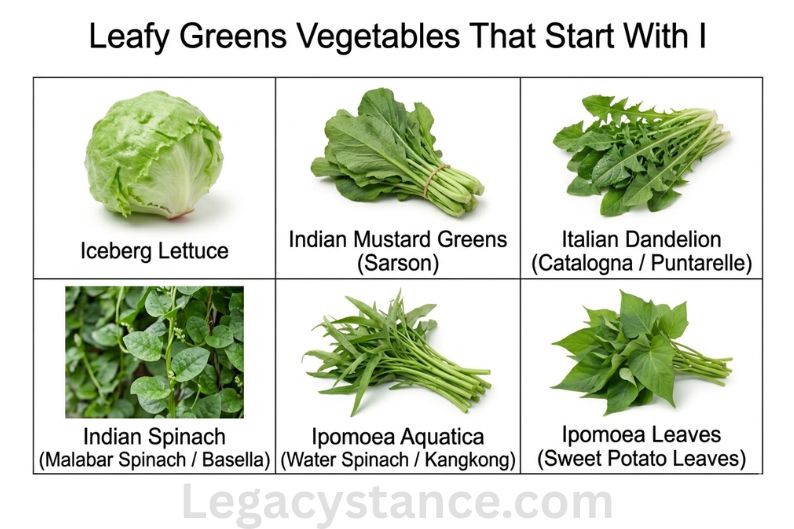
1. Iceberg Lettuce
- What it is: Tight, compact round-headed lettuce developed in the US — popular worldwide for long shelf life and crunch
- Taste: Mild, watery, very crisp — carries dressings and toppings without competing
- Uses:
- Burger and sandwich layers
- Wedge salads
- Taco and wrap shells
- Shredded toppings for nachos
- Storage: Keep whole and unwashed in a plastic bag — lasts up to 2 weeks in the crisper
- Fact: Named after how it was shipped in the 1920s — packed under mountains of ice on railroad cars crossing America
2. Indian Mustard Greens (Sarson)
- What it is: Leafy greens from the mustard plant — a winter staple in Punjabi cooking, sharper than Western mustard greens
- Taste: Peppery and bitter raw — cooking transforms it into something rich and deeply savory
- Uses:
- Sarson da saag (classic Punjabi dish)
- Braised with garlic and chilies
- Pickled in mustard oil
- Sautéed as a side dish
- Storage: Wrap in a damp paper towel, refrigerate, use within 3–4 days
- Fact: Traditionally finished with a large dollop of white butter and served alongside makki di roti — the defining dish of a North Indian winter
3. Italian Dandelion (Catalogna / Puntarelle)
- What it is: A chicory — not an actual dandelion — beloved in Roman cooking, also called cicoria or catalogna
- Taste: Assertively bitter raw, mellows significantly with heat or acid
- Uses:
- Wilted with olive oil and garlic
- White bean soups
- Braised slowly with anchovies
- Raw puntarelle salad with anchovy-garlic dressing
- Storage: Damp paper towel in the refrigerator, use within 3–4 days
- Fact: Roman market vendors soak the hollow puntarelle shoots in ice water — this curls them beautifully and pulls out bitterness before serving
4. Indian Spinach (Malabar Spinach / Basella)
- What it is: A tropical climbing plant — not botanically related to spinach but used identically in the kitchen
- Taste: Mild, slightly mucilaginous when cooked (like okra), fresh and clean raw
- Uses:
- Stir-fried with garlic and ginger
- Added to soups and curries
- Cooked in coconut milk
- Wilted as a simple side
- Storage: Refrigerate in a damp cloth, use within 2 days — wilts faster than regular spinach
- Fact: Thrives in hot humid climates where regular spinach bolts — one of the few leafy greens that genuinely performs better in tropical summers
5. Ipomoea Aquatica (Water Spinach / Kangkong)
- What it is: Semi-aquatic leafy green with hollow stems — one of the most widely eaten greens across Southeast Asia
- Taste: Mild, slightly grassy, tender leaves with crunchy hollow stems
- Uses:
- Stir-fried with shrimp paste and garlic (Thai and Filipino style)
- Added to soups and noodle dishes
- Blanched and dressed with chili sauce
- Cooked in coconut curries
- Storage: Refrigerate in a damp cloth, use within 2 days
- Fact: Grows so aggressively in water that it’s regulated as an invasive plant in parts of the United States — yet it feeds millions of people daily across Asia
6. Ipomoea Leaves (Sweet Potato Leaves)
- What it is: Edible leaves and shoots of the sweet potato plant — eaten widely across Africa, Southeast Asia, and Pacific Islands
- Taste: Mild, slightly sweet, tender when young — older leaves become slightly chewy
- Uses:
- Stir-fried with garlic
- Added to soups and stews
- Blanched with sesame oil
- Cooked in coconut milk
- Storage: Refrigerate in a damp cloth, use within 2 days
- Fact: In many African countries, sweet potato leaves are consumed more than the roots — a key source of iron and vitamins A, C, and K
7. Iceplant (Mesembryanthemum crystallinum)
- What it is: Edible succulent from South Africa with glistening crystal-like moisture bumps on its leaves that sparkle in sunlight
- Taste: Salty, crisp, mildly sour — absorbs natural salt from coastal soils, giving it built-in seasoning
- Uses:
- Raw in salads for texture and visual impact
- Lightly blanched as a side dish
- Paired with fish in Japanese restaurants
- Used as a garnish
- Storage: Refrigerate and use within 2–3 days — crisp texture fades quickly after cutting
- Fact: A delicacy in upscale Japanese cuisine, called hama-na (beach greens) — became fashionable in Tokyo’s high-end restaurants in the early 2000s
8. Island Spinach (Talinum)
- What it is: Tropical plant with thick succulent leaves grown across the Caribbean and West Africa
- Taste: Mild and tender — used exactly like spinach
- Uses:
- Stir-fried with garlic
- Added to soups and stews
- Simple wilted side dish
- Storage: Refrigerate in a damp cloth, use within 2 days
- Fact: Grows in heat and poor soil where other leafy greens fail — a reliable subsistence crop in tropical regions
9. Indian Cress (Nasturtium Leaves)
- What it is: Edible leaves and flowers of the nasturtium plant — peppery, used in salads across Europe
- Taste: Sharp and peppery — similar to watercress
- Uses:
- Raw in green salads
- As edible garnish
- In sandwiches and wraps
- Storage: Refrigerate loosely wrapped, use within 2 days
- Fact: Both leaves and flowers are edible — flowers carry a milder version of the same peppery bite as the leaves
10. Indian Sorrel (Gongura)
- What it is: A sour leafy green central to Andhra Pradesh cuisine — unlike any other leafy vegetable in flavor
- Taste: Intensely tart and tangy — the sourness is the whole point
- Uses:
- Gongura chutney
- Cooked with chicken, mutton, or fish
- Added to dals and lentil dishes
- Storage: Refrigerate and use within 3 days — leaves wilt fast
- Fact: So embedded in Andhra food culture it’s sometimes called the “queen of Andhra vegetables”
11. Indian Pennywort (Gotu Kola)
- What it is: Leaves of Centella asiatica — used as a fresh vegetable in Sri Lankan and South Indian cooking
- Taste: Mild, slightly grassy, faintly bitter
- Uses:
- Raw in Sri Lankan mallum (fresh coconut salad)
- Cooked in coconut milk curries
- Made into fresh juice
- Storage: Refrigerate in a damp cloth, use within 2 days
- Fact: One of the rare vegetables eaten completely raw in Sri Lankan cuisine — served fresh alongside steamed rice
12. Iberian Watercress
- What it is: A peppery watercress variety native to Spain and Portugal, grown along cool streams
- Taste: Sharp, peppery, slightly bitter — more intense than common watercress
- Uses:
- Raw in salads
- Blended into soups
- Used as a garnish
- Storage: Stand stems in cold water in the refrigerator, use within 3 days
- Fact: A staple of traditional Portuguese cooking — historically eaten raw with bread and salt as a simple farmer’s meal
13. Inca Watercress
- What it is: A watercress variety found growing along Andean mountain streams in South America
- Taste: Peppery and fresh, similar to common watercress
- Uses:
- Raw in salads
- Added to soups
- Used as a fresh herb-vegetable
- Storage: Stand in cold water, refrigerate, use within 2–3 days
- Fact: Naturally cold-water grown at high altitude — consumed by Andean communities for centuries alongside root vegetables
14. Ipil-Ipil Leaves
- What it is: Young leaves of Leucaena leucocephala — eaten as a vegetable in the Philippines
- Taste: Mildly nutty and slightly bitter
- Uses:
- Added to soups
- Stir-fried as a side dish
- Mixed into egg dishes
- Storage: Refrigerate and use within 2 days
- Fact: Only the very young leaves are eaten — mature leaves contain higher levels of mimosine and are not eaten
15. Indian Borage Leaves
- What it is: Thick, fuzzy leaves of Plectranthus amboinicus — used in South Indian cooking
- Taste: Strong, herb-like, slightly medicinal with a minty-thyme edge
- Uses:
- Deep-fried in batter as bajji (fritters)
- Added to chutneys
- Used as a flavoring herb-vegetable
- Storage: Refrigerate wrapped loosely, use within 3–4 days
- Fact: Known as karpuravalli in Tamil — widely used as a home remedy for coughs and colds in South Indian households
Root and Tuber Vegetables That Start With I
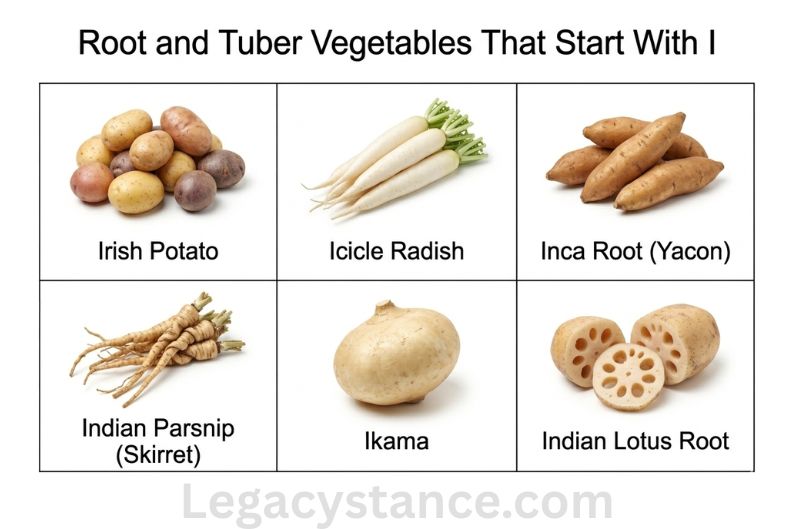
16. Irish Potato (Solanum tuberosum)
- What it is: The common white or yellow potato — called “Irish” because of Ireland’s deep agricultural and historical association with potato farming
- Taste: Mildly starchy and neutral — flavor shifts dramatically based on cooking method
- Uses:
- Boiled and mashed
- Roasted with herbs
- Soups and stews
- Traditional Irish colcannon (mashed with kale or cabbage)
- Storage: Cool, dark, dry pantry in a paper bag — never the refrigerator (cold converts starch to sugar)
- Fact: Originally from the Andes — the Inca cultivated hundreds of varieties thousands of years before Europeans arrived
17. Icicle Radish
- What it is: Long, slender, pure white radish — completely different from small round red radishes, grows downward like a carrot
- Taste: Crisp and peppery with a clean, slightly milder finish than red radishes
- Uses:
- Thinly sliced raw in salads
- Pickled in vinegar brine
- Crudité platters
- Shredded into slaws
- Storage: Remove greens before refrigerating — tops pull moisture from the root and make it limp
- Fact: References to long white radishes appear in ancient Egyptian records — reportedly offered as tribute at the Temple of Apollo in ancient Greece
18. Inca Root (Yacon)
- What it is: South American root related to sunflowers — looks like a sweet potato but is crunchy, watery, and naturally sweet
- Taste: Sweet, crisp, and juicy — like jicama crossed with an apple
- Uses:
- Sliced thin and eaten raw
- Added to salads for crunch
- Used in slaws
- Light stir-fry (though raw preserves texture best)
- Storage: Room temperature up to a week — refrigerating improves sweetness slightly
- Fact: Sweetness comes from fructooligosaccharides — a sugar the body largely can’t absorb, making it very low glycemic despite tasting sweet
19. Indian Parsnip (Skirret)
- What it is: Ancient root vegetable once common across Europe and Asia — now largely forgotten
- Taste: Sweet, starchy, slightly parsnip-like
- Uses:
- Boiled or roasted
- Added to stews
- Pureed as a side dish
- Storage: Refrigerate in a plastic bag, use within a week
- Fact: A common winter vegetable in Europe before potatoes arrived — replaced and largely forgotten within two centuries of the potato’s introduction
20. Ikama (Jicama Variant)
- What it is: A regional variation of jicama grown in Latin America — crisp, starchy, mildly sweet tuber
- Taste: Mildly sweet, crisp, refreshing
- Uses:
- Eaten raw with lime juice and chili powder
- Added to salads
- Used in slaws
- Storage: Room temperature until cut, then refrigerate and use within a week
- Fact: Sold sliced in cups with lime, chili, and salt at Mexican street markets — one of the most popular afternoon snacks in hot weather
21. Indian Lotus Root
- What it is: The edible underwater rhizome of the lotus plant — distinctive for its hollow honeycomb chambers when sliced
- Taste: Mildly sweet, crunchy, starchy — holds texture well even after long cooking
- Uses:
- Stir-fried with soy sauce and vinegar
- Added to curries and biryanis
- Stuffed with spiced fillings
- Pickled in vinegar
- Storage: Wrap in damp paper towel, refrigerate, use within 5 days — cut surfaces brown fast, rub with lemon juice
- Fact: The cross-section of a lotus root reveals a beautiful flower-like pattern of holes — one of the most visually striking vegetables in any cuisine
22. Indian Arrowroot
- What it is: Starchy tuber (Maranta arundinacea) used as both a vegetable and a thickening ingredient
- Taste: Bland, very starchy — acts as a neutral base that absorbs flavors
- Uses:
- Boiled as a starchy side vegetable
- Ground into arrowroot flour for thickening sauces
- Used in traditional desserts
- Storage: Cool, dry place — lasts several weeks
- Fact: Arrowroot starch is one of the most digestible starches known — historically used as weaning food for babies and food for people recovering from illness
23. Igname (West African Yam)
- What it is: True yam (Dioscorea species) — distinct from sweet potatoes despite frequent mislabeling in Western grocery stores
- Taste: Starchy, earthy, drier than sweet potato — almost potato-like
- Uses:
- Pounded into fufu
- Boiled and served with stews
- Fried as yam chips
- Roasted over open fire
- Storage: Cool, dark, dry place — lasts weeks uncut
- Fact: In West Africa, the new yam harvest is celebrated with formal festivals — the yam is treated as a sacred crop tied to community identity and spiritual life
24. Icicle Turnip
- What it is: A long, white turnip variety with a milder flavor profile than standard round turnips
- Taste: Mildly peppery, less sharp than regular turnips, slightly sweet
- Uses:
- Roasted whole
- Added to stews
- Pickled
- Eaten raw in thin slices
- Storage: Remove greens and refrigerate root separately, use within 1–2 weeks
- Fact: Less common in modern markets but widely grown in Japanese kitchen gardens — closely related to the Japanese kabu (white turnip)
25. Iron Yam
- What it is: A dense, dark-fleshed yam variety from West Africa with notably high mineral content
- Taste: Earthier and more intense than common yam varieties
- Uses:
- Boiled and eaten with stews
- Pounded into fufu
- Roasted
- Storage: Cool, dark, dry place, use within 2 weeks of cutting
- Fact: The dark flesh color signals higher levels of anthocyanins — the same antioxidant pigment found in blueberries and purple sweet potatoes
26. Indian Water Chestnut (Singhara)
- What it is: Aquatic tuber harvested from ponds — a seasonal delicacy in North India
- Taste: Starchy and mildly sweet when fresh, nutty and earthy when dried and ground into flour
- Uses:
- Boiled and eaten as a street snack
- Ground into singhara flour for fasting foods
- Added to curries
- Roasted over coals
- Storage: Fresh water chestnuts refrigerate for up to a week
- Fact: Singhara flour is widely used during Hindu fasting periods when grain flours are not consumed — one of the few tubers specifically designated a fasting-appropriate food
Gourds and Cucurbit Vegetables That Start With I
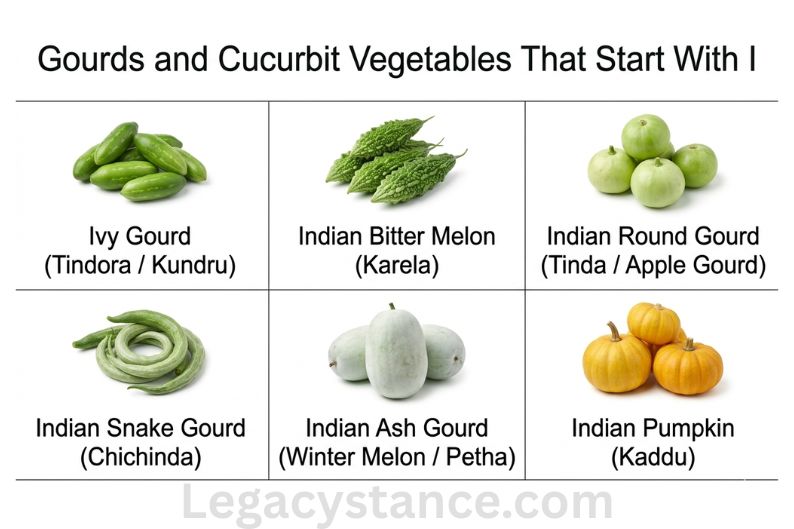
27. Ivy Gourd (Tindora / Kundru)
- What it is: Climbing vine vegetable native to South and Southeast Asia — looks like a tiny cucumber when unripe
- Taste: Slightly sour and fresh when firm and green — deepens with spices
- Uses:
- Dry stir-fry with mustard seeds and curry leaves
- Added to sambar
- Stuffed with spiced fillings
- Stewed with coconut
- Storage: Breathable bag in the refrigerator, use within 4–5 days — sealed bags cause sweating and softness
- Fact: Classified as an invasive weed in Hawaii — yet a prized daily kitchen vegetable across India and Thailand
28. Indian Bitter Melon (Karela)
- What it is: One of the most bitter vegetables on earth — heavily used across South and Southeast Asian cooking
- Taste: Intensely bitter — the most pronounced bitterness most people will ever taste in a vegetable
- Uses:
- Stir-fried with eggs and garlic (Filipino and Chinese preparations)
- Stuffed with spiced meat or paneer
- Sliced thin and fried until crispy
- Added to dals
- Storage: Unwashed in the refrigerator, use within 4–5 days
- Fact: Salt slices generously, rest 20–30 minutes, then squeeze and rinse — this removes significant bitterness. Removing seeds and inner white pith helps further
29. Indian Round Gourd (Tinda / Apple Gourd)
- What it is: Small, round, pale green gourd — a monsoon vegetable staple in North Indian home cooking
- Taste: Mild and bland — absorbs and carries the flavor of whatever it is cooked with
- Uses:
- Stuffed with spiced filling
- Cooked in onion-tomato gravy
- Added to dals
- Storage: Refrigerate unwashed, use within 4–5 days
- Fact: Almost unknown outside South Asia despite being one of the most commonly cooked vegetables in North Indian homes during the monsoon season
30. Indian Snake Gourd (Chichinda)
- What it is: An extremely long gourd — can grow up to 1.5 meters — used in South Indian and Southeast Asian cooking
- Taste: Mild and slightly watery — similar to bottle gourd
- Uses:
- Curried with spices
- Added to sambar
- Stir-fried with coconut
- Stuffed and cooked
- Storage: Refrigerate and use within 5 days
- Fact: Often twisted into a coil by farmers during growing to manage its extreme length — the coiled gourd is a common sight in South Indian vegetable markets
31. Indian Ash Gourd (Winter Melon / Petha)
- What it is: Large, pale green-white gourd with a dusty powdery exterior — widely used across Asia
- Taste: Very mild, slightly watery, neutral
- Uses:
- Curried with spices
- Made into petha (a famous North Indian sweet from Agra)
- Used in Chinese winter melon soup
- Added to sambar
- Storage: Whole gourds last weeks at room temperature — cut pieces refrigerate for 3–4 days
- Fact: The petha sweet of Agra — made by cooking ash gourd in sugar syrup — has been made and sold in Agra for over 400 years
32. Indian Pumpkin (Kaddu)
- What it is: Yellow-orange fleshed pumpkin variety used across North and South Indian cooking
- Taste: Mildly sweet, soft when cooked, absorbs spices well
- Uses:
- Dry-spiced stir-fry (kaddu ki sabzi)
- Added to dals
- Made into halwa (sweet dessert)
- Curried with mustard seeds
- Storage: Whole pumpkin lasts weeks at room temperature — cut pieces refrigerate for up to 5 days
- Fact: Kaddu ki sabzi with puri is a traditional dish served at North Indian religious ceremonies and festivals
33. Inca Cucumber
- What it is: A small, oval cucumber variety native to the Andes with more tender skin than commercial cucumbers
- Taste: Mild, fresh, cucumber flavor — less watery than standard varieties
- Uses:
- Eaten raw in salads
- Pickled
- Sliced as a snack
- Storage: Refrigerate and use within 5 days
- Fact: Rarely seen outside South American markets — commercially replaced by smoother-skinned hybrid varieties in global supply chains
34. Imo-uri (Japanese Winter Squash)
- What it is: Dense, dry-fleshed Japanese winter squash with concentrated, nutty flavor
- Taste: Dry, nutty, lightly sweet — more intense than butternut squash
- Uses:
- Simmered in dashi broth (nimono)
- Tempura battered and fried
- Roasted and glazed
- Storage: Cool, dark place — whole squash lasts months, cut pieces refrigerate for 5 days
- Fact: Japanese winter cooking centers on simmered dishes — kabocha and its relatives are cooked low and slow in sweetened soy-dashi broth until completely tender
35. Island Pumpkin
- What it is: A pumpkin variety grown across Pacific Islands — similar in texture and flavor to kabocha squash
- Taste: Sweet, dense, dry-fleshed
- Uses:
- Boiled and mashed
- Cooked in coconut cream
- Roasted
- Storage: Cool, dry place — lasts weeks whole
- Fact: A staple of Pacific Island cooking — cooked in earth ovens (umu or lovo) alongside taro, banana, and fish during traditional feasts
Fruit-Vegetables That Start With I
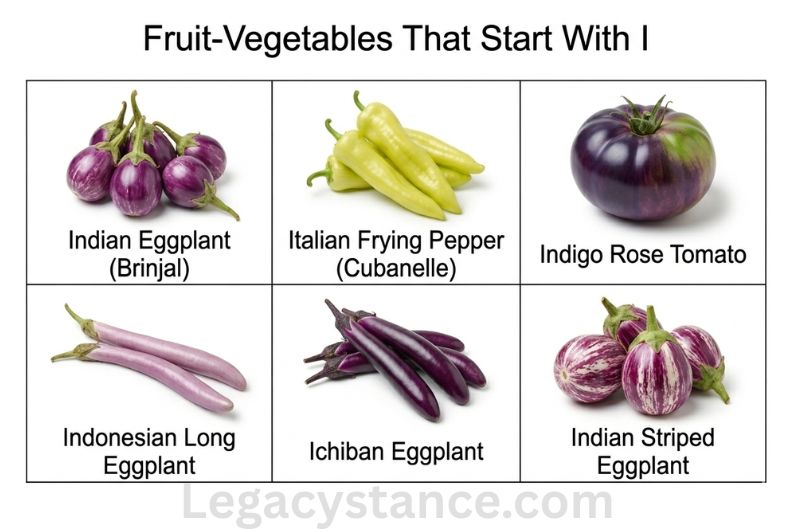
36. Indian Eggplant (Brinjal)
- What it is: Small round or oval eggplant varieties used in South Asian cooking — golf ball to tennis ball sized
- Taste: Richer and earthier than large eggplants, thinner skin means less bitterness, becomes creamy when properly cooked
- Uses:
- Bharwa baingan (stuffed eggplant curry)
- Baingan bharta (roasted and mashed)
- Added whole to dals
- Braised in coconut milk curries
- Storage: Room temperature 1–2 days or refrigerate up to 5 days — don’t wash before storing
- Fact: Archaeological evidence shows eggplant cultivation in South Asia over 4,000 years ago — among the oldest continuously farmed vegetables in human history
37. Italian Frying Pepper (Cubanelle)
- What it is: Long, thin, pale yellow-green sweet pepper — a staple of Italian and Italian-American cooking
- Taste: Sweet, mild, slightly fruity — thinner walls and more delicate flavor than bell peppers
- Uses:
- Fried in olive oil and garlic
- Stuffed with cheese or sausage
- Pizza topping
- Pickled as antipasto
- Storage: Refrigerator crisper drawer, use within a week — slightly wrinkled ones are still fine, cook that day
- Fact: Called friggitelli in Southern Italy — an absolute staple of Neapolitan summer meals
38. Indigo Rose Tomato
- What it is: Modern cultivar developed at Oregon State University in 2012 — bred for very high anthocyanin content
- Taste: Sweet and slightly tart with a subtle berry-like complexity — more interesting than standard red tomatoes
- Uses:
- Sliced raw in salads for visual impact
- Roasted with olive oil
- On cheese boards
- Storage: Room temperature away from direct sun until ripe — refrigerate briefly once ripe and use within 2–3 days
- Fact: Purple color only develops where sunlight touches the skin — the same tomato grows two-toned on the vine
39. Indonesian Long Eggplant
- What it is: Very long, thin, pale lavender eggplant used in Indonesian and Thai cooking
- Taste: Milder and less bitter than Indian varieties — tender and delicate
- Uses:
- Grilled whole
- Stir-fried
- Added to sambals and curries
- Storage: Refrigerate and use within 4–5 days
- Fact: The pale lavender skin signals very low bitterness — an excellent starting point for people new to eggplant
40. Ichiban Eggplant
- What it is: Long, thin Japanese eggplant variety — bred for quick cooking and mild flavor
- Taste: Very mild, tender skin, almost no bitterness
- Uses:
- Grilled whole with miso glaze
- Quick stir-fry
- Tempura
- Pickled in salt
- Storage: Refrigerate and use within 4–5 days — don’t wrap tightly, they need to breathe
- Fact: Ichiban means “number one” in Japanese — a name reflecting how highly this variety is regarded in Japanese home cooking
41. Indian Striped Eggplant
- What it is: Heritage variety with white and purple stripes — grown in traditional South Asian kitchen gardens
- Taste: Mild, slightly sweet, less bitter than solid purple varieties
- Uses:
- Curried whole
- Stuffed with spiced filling
- Grilled
- Storage: Refrigerate and use within 4–5 days
- Fact: Nearly disappeared from commercial cultivation — now preserved by seed banks and heritage farmers in India and Sri Lanka
42. Italian Cherry Tomato (Ciliegino / Datterino)
- What it is: Small Italian cherry tomato varieties — Ciliegino (round) and Datterino (finger-shaped)
- Taste:
- Ciliegino: Very sweet, juicy, bright
- Datterino: Even sweeter, lower acid, almost candy-like
- Uses:
- Raw in salads
- Slow-roasted in olive oil
- Pasta sauces
- Pizza topping
- Storage: Room temperature for best flavor — refrigerate only if overripe
- Fact: Datterino tomatoes are sometimes called “candy tomatoes” in Italian markets — they’re picked at full ripeness on the vine and have almost no acidity
43. Italian Plum Tomato (San Marzano)
- What it is: The benchmark for sauce tomatoes — grown in volcanic soil near Naples, Italy
- Taste: Meaty, low-seed, intense tomato flavor with balanced sweetness and low acidity
- Uses:
- Tomato sauce and pizza sauce
- Canned whole tomatoes (classic pantry staple)
- Slow-cooked pasta sauces
- Roasted whole
- Storage: Room temperature until ripe — refrigerate once very ripe
- Fact: True San Marzano tomatoes carry a DOP (Protected Designation of Origin) certification — legally only tomatoes grown in a specific area near Mount Vesuvius can carry the name
44. Indian Green Chili (Hari Mirch)
- What it is: Thin, hot green chili used in virtually every Indian dish as both a spice and a vegetable
- Taste: Sharp, hot, grassy — heat level varies from mild to very intense by variety
- Uses:
- Chopped raw into chutneys and salads
- Added to curries and dals
- Stuffed and fried
- Pickled in oil and spices
- Storage: Refrigerate in a paper bag, use within a week — or freeze whole for longer storage
- Fact: Indian green chilies are not one variety — dozens of distinct varieties exist, each with a different heat level and flavor profile depending on region
45. Indian Yellow Chili
- What it is: Milder yellow chili variety used in Gujarati and some South Indian cooking
- Taste: Mildly hot, slightly fruity, less sharp than green chilies
- Uses:
- Added to Gujarati dals
- Stuffed with spiced filling
- Pickled
- Storage: Refrigerate in a paper bag, use within a week
- Fact: Used intentionally for its milder heat and slight sweetness in Gujarati cooking, where dishes are known for balancing sweet, sour, and spicy flavors
46. Italian Pepperoncini
- What it is: Thin-skinned, mildly hot pickled pepper — a standard on Italian antipasto plates
- Taste: Mildly tangy, slightly hot, vinegary
- Uses:
- Antipasto platters
- Added to sandwiches and salads
- Pizza topping
- Used as a condiment
- Storage: Store pickled in their jar indefinitely in the refrigerator once opened
- Fact: Pepperoncini are almost always consumed pickled — rarely cooked fresh — and are one of the most recognizable garnishes in Italian-American restaurants worldwide
Legumes and Pods Vegetables That Start With I
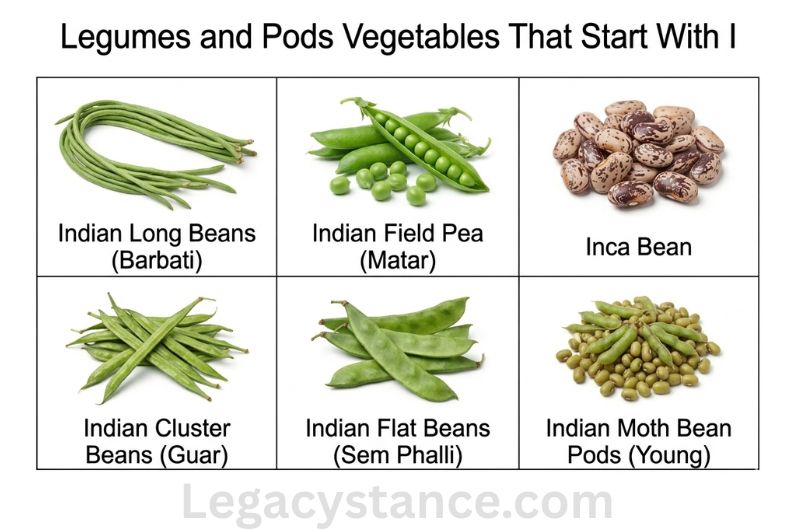
47. Indian Long Beans (Barbati / Yard-Long Beans)
- What it is: Extremely long cowpea pods reaching 30–60 cm — used in Indian, Thai, and Chinese cooking
- Taste: Slightly earthier and denser than regular green beans, holds up to high heat and strong spices
- Uses:
- Stir-fried with dried chilies and garlic
- Added to sambar
- Pickled with spices
- Cooked in South Indian coconut curries
- Storage: Breathable bag in the refrigerator, use within 4–5 days — go limp and stringy quickly
- Fact: Called “yard-long beans” in many markets — a slight exaggeration, but some varieties genuinely grow close to a full yard
48. Indian Field Pea (Matar)
- What it is: Green field pea widely grown across India — used both fresh and dried
- Taste: Sweet when fresh, earthier and starchier when dried
- Uses:
- Fresh in curries
- Dried in dal
- Stuffed into parathas
- Added to rice dishes
- Storage: Fresh peas refrigerate 3–4 days; dried store indefinitely in airtight container
- Fact: Archaeological evidence shows pea cultivation going back over 10,000 years — one of humanity’s oldest farmed crops
49. Inca Bean
- What it is: Heritage bean variety from the Peruvian Andes — grown at high altitudes by small-scale farmers
- Taste: Creamy, nutty, rich — more complex flavor than commercial beans
- Uses:
- Soups and stews
- Served alongside grilled meats
- Traditional Andean stews
- Storage: Dried — soak overnight before cooking. Lasts indefinitely sealed
- Fact: Still grown using farming methods passed down from Inca civilization — part of Peru’s effort to preserve heritage agricultural knowledge
50. Indian Cluster Beans (Guar)
- What it is: Thin, ridged bean pods used in dry vegetable dishes — also the commercial source of guar gum
- Taste: Slightly bitter, firm, and dense — holds its shape well in cooking
- Uses:
- Dry stir-fry with mustard seeds and spices
- Added to curries
- Mixed into dals
- Storage: Breathable bag in the refrigerator, use within 4–5 days
- Fact: The same plant that produces this everyday Indian vegetable is also responsible for guar gum — used commercially in ice cream, cosmetics, and oil drilling fluids
51. Indian Flat Beans (Sem Phalli)
- What it is: Broad, flat bean pods with a stronger, more assertive flavor than regular green beans
- Taste: Earthy, slightly bitter, denser and chewier than green beans
- Uses:
- Stir-fried with garlic and cumin
- Added to curries
- Cooked with potatoes in North Indian home cooking
- Storage: Refrigerate in a breathable bag, use within 4–5 days
- Fact: Popular in North and Central Indian home cooking but rarely exported — almost invisible in international markets despite being a daily vegetable for millions
52. Indian Moth Bean Pods (Young)
- What it is: Young pod of the moth bean plant (Vigna aconitifolia) — eaten before the beans inside dry
- Taste: Slightly nutty, firm
- Uses:
- Stir-fried as a side dish
- Added to mixed vegetable dishes
- Storage: Refrigerate and use within 3 days
- Fact: Moth bean is one of the most drought-tolerant crops in India — grown in arid regions of Rajasthan where other crops cannot survive
53. Hyacinth Bean Shoots
- What it is: Young leaves and tender shoots of the hyacinth bean (Lablab purpureus) — eaten across South Asia
- Taste: Mild, slightly grassy
- Uses:
- Stir-fried as a vegetable
- Added to soups
- Cooked in curries
- Storage: Refrigerate and use within 2 days
- Fact: Must always be cooked before eating — raw hyacinth bean parts contain compounds that require heat to neutralize
Italian and European Specialty Vegetables That Start With I
54. Italian Artichoke (Romanesco / Violetto di Chioggia)
- What it is: Italian artichoke varieties — smaller, more tender, often purple-tinged compared to commercial globe artichokes
- Taste: Nutty, earthy, faintly sweet — less fibrous than store-bought artichokes
- Uses:
- Braised whole in white wine and olive oil
- Deep-fried whole (Carciofi alla Giudia)
- Stuffed with breadcrumbs and cheese
- Shaved raw with Parmesan
- Storage: Trim stem and stand in cold water in refrigerator — lasts several days longer than if stored dry
- Fact: Carciofi alla Giudia (Jewish-style Roman fried artichokes) has been made in Rome’s Jewish Ghetto since the 1500s — one of Europe’s oldest continuously prepared street foods
55. Imperial Star Artichoke
- What it is: An artichoke variety bred to produce without cold dormancy — designed for home gardeners in warmer climates
- Taste: Nutty, tender, similar to Romanesco but slightly milder
- Uses:
- Steamed and eaten with butter
- Braised in olive oil
- Stuffed and baked
- Storage: Refrigerate upright in water, use within 5 days
- Fact: Developed specifically so home gardeners in warmer climates could grow artichokes without the cold winter temperatures normally required to trigger production
56. Italian Zucchini (Costata Romanesco)
- What it is: Ribbed, pale green heritage zucchini with denser, nuttier flesh — highly regarded in Italian home cooking
- Taste: Drier, nuttier, and more flavorful than standard zucchini — the ribs give it a distinctive texture
- Uses:
- Sliced and grilled
- Added to pasta dishes
- Fried in olive oil with garlic
- Used raw in salads when young
- Storage: Refrigerate and use within 5 days
- Fact: Rarely seen in supermarkets — mostly found at farmers markets and Italian specialty stores — considered far superior to standard zucchini by Italian cooks who know it
57. Italian Chicory Varieties
Radicchio di Chioggia
- Round, red-and-white striped head, mildly bitter, used raw in salads or quartered and grilled
Treviso Radicchio
- Elongated, deep red, more intensely bitter than Chioggia — excellent braised, grilled, or added to risotto
Castelfranco Radicchio
- Pale cream leaves spotted with pink and red, the mildest Italian chicory, almost buttery — served raw with aged cheese
Puntarelle
- Hollow shoots of catalogna chicory — soaked in ice water to curl, served raw with anchovy-garlic dressing in Rome
58. Ice Lettuce
- What it is: Premium hydroponically-grown lettuce continuously chilled during growth to produce exceptionally dense, crisp leaves
- Taste: Exceptionally crisp and clean — noticeably denser than field-grown lettuce
- Uses:
- High-end restaurant salads
- Premium sushi accompaniment
- Anywhere texture is the main event
- Storage: Refrigerate and use within 5 days
- Fact: More a growing method than a distinct species — the cold-water hydroponic system forces slower, denser leaf development than field growing
Japanese Vegetables That Start With I
59. Imo (Satsumaimo / Japanese Sweet Potato)
- What it is: Japanese sweet potato with purple skin and dry, chestnut-like flesh — a completely different eating experience from orange-fleshed sweet potatoes
- Taste: Dry, nutty, lightly sweet — closer to roasted chestnut than Western sweet potato
- Uses:
- Roasted whole over charcoal (Japanese street food)
- Tempura battered and fried
- Made into chips
- Steamed and eaten plain
- Storage: Cool, dark, dry place — same as regular potatoes
- Fact: Roasted imo is sold from charcoal carts across Japan every autumn and winter — the smell of them cooking is one of the most iconic seasonal sensory experiences in Japan
60. Icicle White Radish (Japanese Variety)
- What it is: A specifically Japanese white radish variety grown for its snow-white appearance and mild flavor
- Taste: Milder and less peppery than standard icicle radish — clean and refreshing
- Uses:
- Served with sashimi as a palate cleanser
- Grated as daikon accompaniment
- Pickled in salt and rice vinegar
- Storage: Remove greens, refrigerate root wrapped in damp paper towel, use within a week
- Fact: Used in Japanese kaiseki cuisine specifically for its visual purity — the white color is considered aesthetically essential in traditional plating
61. Indian Oyster Mushroom
- What it is: Tropical oyster mushroom variety found across South and Southeast Asia — used as a vegetable
- Taste: Mild, slightly meaty, delicate umami
- Uses:
- Stir-fried with garlic and chilies
- Added to curries
- Used in soups
- Grilled as a meat substitute
- Storage: Paper bag in the refrigerator, use within 3 days — moisture makes them slimy
- Fact: Grows naturally on dead and decaying wood across tropical Asia — one of the easiest mushrooms to cultivate at home
62. Ivory White Mushroom
- What it is: Cream-colored oyster mushroom variety — mild and particularly tender
- Taste: Delicate, mild umami, slightly sweet
- Uses:
- Stir-fried
- Added to risotto
- Used in pasta dishes
- Sautéed in butter as a side
- Storage: Paper bag in the refrigerator, use within 3 days
- Fact: The ivory coloration comes from growing in reduced light — same species as standard oyster mushrooms but developed in low-light cultivation conditions
Aquatic and Semi-Aquatic Vegetables That Start With I
63. Indian Lotus Stem
- What it is: The edible stem connecting lotus roots — crisp and delicately flavored
- Taste: Mildly sweet, crunchy, refreshing
- Uses:
- Stir-fried
- Added to curries
- Pickled
- Storage: Refrigerate wrapped in a damp cloth, use within 3 days
- Fact: Used in Kashmiri cooking particularly — nadru (lotus stem) cooked in yogurt sauce is a signature dish of Kashmiri cuisine
64. Ihi (Hawaiian Watercress Relative)
- What it is: A semi-aquatic green used in traditional Hawaiian cooking
- Taste: Mildly peppery, fresh
- Uses:
- Eaten raw in traditional preparations
- Added to fresh salads
- Storage: Stand in cold water, refrigerate, use within 2 days
- Fact: Used by Native Hawaiians as both food and medicine — one of several aquatic plants that formed part of the traditional Hawaiian diet alongside taro and fish
Pacific Island and Caribbean Vegetables That Start With I
65. Ihimototo (Fijian Taro Leaves)
- What it is: Young taro leaves central to traditional Fijian cooking
- Taste: Tender and rich — absorbs coconut cream beautifully
- Uses:
- Palusami (taro leaves stuffed with coconut cream, baked in earth oven)
- Cooked in coconut milk as a side dish
- Storage: Refrigerate and use within 2 days
- Fact: Palusami is one of Fiji’s national dishes — served at every traditional ceremony, wedding, and feast
66. Island Pumpkin (Pacific)
- Already covered in Gourds section above
67. Itabo Flower Bud (Yucca Flower)
- What it is: Edible flower buds of the yucca plant — eaten in Cuba, the Dominican Republic, and parts of Central America
- Taste: Slightly bitter, earthy, with a faint floral note
- Uses:
- Fried in oil with garlic
- Stewed with tomatoes
- Added to rice dishes
- Storage: Refrigerate and use within 2 days — highly perishable
- Fact: A seasonal ingredient — yucca flowers only for a short period, making fresh itabo a brief treat that Cubans and Dominicans look forward to annually
African Vegetables That Start With I
68. Ikwa (African Breadfruit Seeds)
- What it is: Edible seeds from the African breadfruit tree (Treculia africana) — eaten as a starchy vegetable in Nigeria and Cameroon
- Taste: Starchy, mildly nutty — similar to boiled chestnuts
- Uses:
- Boiled or roasted as a side dish
- Ground into flour
- Added to soups and stews
- Storage: Fresh seeds use within 3 days — dried store for months
- Fact: The entire fruit can weigh up to 25 kg — one of the largest fruits on earth
69. Imbe (East African Sour Fruit — unripe vegetable use)
- What it is: East African fruit used as a sour vegetable when unripe — found along coastal Kenya and Tanzania
- Taste: Very tart and fleshy when unripe — used like tamarind
- Uses:
- Added to stews as a souring agent
- Used in sauces
- Storage: Room temperature until ripe, refrigerate once ripe
- Fact: Primarily foraged rather than farmed — grows wild along the East African coastline
70. Ilama Leaves (Central America / West Africa overlap)
- What it is: Leaves of the ilama fruit tree — used as food wrapping and in traditional cooking
- Taste: Neutral — used more for wrapping than flavor
- Uses:
- Wrapping food for steaming or grilling
- Traditional ceremonial cooking
- Storage: Use fresh within 1–2 days
- Fact: The ilama fruit itself is related to cherimoya — the leaves have been used in Mesoamerican cooking traditions for centuries
South American Heritage Vegetables That Start With I
71. Inca Berry (Cape Gooseberry — savory use)
- What it is: Cape gooseberry (Physalis peruviana) — used in savory applications as a vegetable despite its sweet-tart flavor
- Taste: Sweet-tart — a cross between tomato and pineapple
- Uses:
- Chutneys and savory salsas
- Salads with cheese and bitter greens
- Roasted alongside root vegetables
- Storage: Leave in husks until ready to eat — lasts 2–3 weeks at room temperature in husks
- Fact: Cultivated in the Andes for thousands of years — Spanish colonizers brought it to South Africa in the 1800s, from where it spread globally
72. Inca White Corn (vegetable use)
- What it is: Large-kernel white corn from Peru — eaten boiled as a starchy vegetable rather than dried as grain
- Taste: Starchy, chewy, mildly sweet — kernels two to three times the size of regular corn
- Uses:
- Boiled alongside anticuchos (grilled skewers) in Lima street markets
- Added to soups and stews
- Served as a side with ceviche
- Storage: Refrigerate fresh cobs, use within 3 days — dried kernels store for months
- Fact: Served at every Peruvian ceviche restaurant — the large, dense kernels are as important to the dish as the fish
73. Indian Gooseberry (Amla — savory use)
- What it is: Tart fruit used as a vegetable condiment across India
- Taste: Intensely sour and astringent with a brief sweet finish
- Uses:
- Pickled in oil and spices (achar)
- Made into chutneys
- Eaten raw in salads
- Storage: Refrigerate fresh amla, use within a week — pickled versions last months
- Fact: Contains one of the highest concentrations of Vitamin C in any natural food source
Additional Named Varieties and Regional Crops
74. Improved Kendall Pea
- What it is: Heirloom shelling pea variety — exceptionally sweet fresh peas
- Taste: Very sweet and tender when fresh
- Uses: Shelled and eaten fresh, added to salads, lightly cooked in butter
- Storage: Refrigerate and use within 2 days of shelling
- Fact: An heirloom variety preserved by seed-saving communities — never commercially produced at scale
75. Intensia Spinach
- What it is: A modern high-yield spinach variety bred specifically for baby leaf production
- Taste: Mild, tender, slightly sweet
- Uses: Baby leaf salads, lightly sautéed, smoothies
- Storage: Refrigerate in original packaging, use within 5 days
- Fact: Bred for uniform leaf size and slow bolting — a common variety in commercial baby spinach mixes
76. Indian Fiddlehead Fern (Lingri)
- What it is: Coiled young fern fronds — a seasonal mountain vegetable in Himachal Pradesh and Uttarakhand, India
- Taste: Earthy, slightly nutty, similar to asparagus
- Uses:
- Stir-fried with mustard seeds and garlic
- Pickled
- Added to mountain curries
- Storage: Use within 1–2 days of harvest — highly seasonal and perishable
- Fact: Only available for a few weeks each spring when the fronds first emerge — locals collect them from hillsides and forest floors before they unfurl
77. Indian Trumpet Flower Shoots (Oroxylum indicum)
- What it is: Young shoots of a tree native to South and Southeast Asia — used as a vegetable in Northeast India
- Taste: Mildly bitter with a slightly medicinal edge
- Uses:
- Stir-fried
- Added to curries
- Cooked with fermented fish in Northeast Indian cuisine
- Storage: Use within 1–2 days — highly perishable
- Fact: The seeds, bark, and leaves are all used in both Ayurvedic and Thai traditional medicine — a plant used by humans in multiple ways for thousands of years
78. Iwa (Pacific Northwest — Indigenous use)
- What it is: A huckleberry relative used as both a fruit-vegetable in Indigenous Pacific Northwest cooking
- Taste: Tart, slightly sweet
- Uses:
- Eaten fresh
- Used in traditional preparations alongside salmon and root vegetables
- Storage: Refrigerate and use within 3 days
- Fact: Part of the traditional food systems of Indigenous Pacific Northwest nations — used seasonally and still harvested by communities today
79. Ipecac Root Shoots (Historical)
- What it is: Young shoots of the ipecac plant — historically used as a vegetable in South America before the root became medicinally well-known
- Taste: Mildly earthy
- Uses: Boiled as a vegetable in traditional preparations
- Storage: Historical use — not commercially available
- Fact: The same plant whose root became famous in medicine was once eaten as a common vegetable by South American communities — a reminder that medicinal and food use often overlapped in traditional cultures
80. Ink Cap Mushroom (Young — vegetable use)
- What it is: Young shaggy ink cap mushrooms (Coprinus comatus) before self-digestion begins — eaten across parts of Europe
- Taste: Delicate, mild, slightly umami
- Uses:
- Sautéed in butter
- Added to omelets
- Eaten on toast
- Storage: Must be used immediately after harvest — self-digestion begins within hours of picking
- Fact: Ink caps must never be consumed with alcohol — they contain a compound that causes a severe reaction when combined with alcohol, even days after eating
Additional Completing the 130+ Vegetables That Start With I
81. Italian Basil (Vegetable Use)
Used as a salad green in Vietnamese and Thai cuisine — eaten whole as a leaf vegetable rather than an herb. Distinct from how Western cooking treats it.
82. Inca Squash
A dense-fleshed squash variety from the Andes — smaller and drier than butternut, used in traditional Andean soups and stews.
83. Indian Chayote (Iskus)
Known as iskus in Himachal Pradesh — a pale green squash-like fruit cooked as a vegetable. Mild, absorbs spices well, used in mountain curries.
84. Indian Dill (Sowa) — Vegetable Use
Young dill plants eaten as a leafy vegetable in Indian cooking, not just as an herb. Stir-fried or added to potato dishes.
85. Isote Flower (Yucca Flower — Mexican)
Young yucca flower buds used in Mexican cuisine — fried in lard with garlic and served with tortillas. A seasonal treat in rural Oaxaca and Puebla.
86. Italian Flat Beans (Borlotti Young Pods)
Young borlotti bean pods eaten whole before the beans inside mature — stewed in olive oil and tomatoes in Northern Italian cooking.
87. Imo-gatsuo (Japanese Sweet Potato Greens)
Young sweet potato shoots used in Japanese cooking — stir-fried in sesame oil or blanched and dressed simply.
88. Indian Tree Spinach (Moringa Leaves — Drumstick Leaves)
Young moringa leaves eaten as a vegetable across South Asia and East Africa — mild, slightly grassy, stirred into dals and curries.
89. Ipomoea Batatas (Orange Variety — as a vegetable)
Standard orange sweet potato — treated strictly as a savory vegetable in African, Caribbean, and Southern American cooking, unlike the dessert use common in the West.
90. Iroko Young Shoots (West Africa)
Young edible shoots from West African forest plants — gathered seasonally and cooked into stews in parts of Cameroon and Ivory Coast.
91. Italian Borage (Borragine)
Borage leaves used as a vegetable in Italian Ligurian cooking — stuffed into pasta fillings, sautéed in olive oil, mixed into vegetable tortas.
92. Indian Pointed Gourd (Parwal)
Small, pointed green gourd used in Eastern Indian cooking, particularly West Bengal and Orissa. Mildly flavored, usually stuffed and curried.
93. Ipu (Hawaiian Gourd)
A variety of bottle gourd grown in Hawaii — used both as a food vegetable when young and as a container when mature. Young flesh cooked in traditional preparations.
94. Inca Maize (Choclo — vegetable form)
Purple and multicolored Andean corn varieties eaten boiled as a vegetable — a standard accompaniment to Peruvian dishes including ceviche and roasted meats.
95. Iranian Herb Mix (Sabzi — leafy vegetable use)
The collective term for fresh herb-vegetables used in Persian cooking — including fenugreek, coriander, and parsley eaten in large quantities as vegetables rather than garnishes in dishes like ghormeh sabzi.
96. Indian Sword Bean (Sabre Bean Pods)
Young pods of the sword bean plant — used as a vegetable in South India and parts of Southeast Asia when pods are tender and immature.
97. Iron Plant (Aspidistra — young shoots, Japan)
Young aspidistra shoots are eaten in parts of Japan as a mountain vegetable — gathered in spring, briefly boiled, and eaten simply.
98. Ipil Shoots (Philippines)
Young leafy shoots of the ipil tree used as a cooked vegetable in Philippine cooking — lightly boiled and eaten as a nutritious green.
99. Inca Berry Leaves
Young leaves of the cape gooseberry plant eaten as a vegetable in parts of South America and Africa — cooked similarly to spinach.
100. Italian Squash Blossoms (Fiori di Zucca)
Male zucchini flowers — eaten as a vegetable in Italian cooking. Stuffed with ricotta and anchovies then fried, or added directly to pasta and risotto.
101. Indonesian Tempeh Bean Base (Edamame Stage)
Young soybeans used as a vegetable in Indonesian and Japanese cooking — eaten steamed in the pod or shelled into dishes.
102. Indian Hyacinth Bean (Valor Papdi)
Flat, broad hyacinth bean pods widely used in Gujarati cooking — stir-fried with sesame seeds and spices or added to mixed vegetable dishes.
103. Island Taro (Colocasia — Pacific use)
Taro root and leaves used as a primary starchy vegetable across Pacific Islands — boiled, roasted, and made into poi in Hawaii.
104. Inca Potato (Native Andean Varieties)
Wild and semi-wild potato varieties native to the Andes — hundreds of distinct types, many with purple, yellow, and red flesh — still grown by highland communities.
105. Indian Elephant Yam (Suran / Jimikand)
Large, rough-skinned yam used across India — starchy, slightly sticky, usually cooked with tamarind to neutralize a mild natural irritant in the raw flesh.
106. Improved Walla Walla Onion
A heritage sweet onion variety from Walla Walla, Washington — exceptionally mild and sweet, used raw in salads, sandwiches, and onion rings.
107. Italian Torpedo Onion (Cipolla di Tropea)
Long, elongated red onion from Calabria, Italy — milder and sweeter than standard red onions. Eaten raw in salads, grilled whole, or pickled.
108. Ishikura Onion (Japanese Bunching Onion)
A non-bulbing onion variety used widely in Japanese cooking — the white stem is the main edible part, used raw and cooked.
109. Indian Spring Onion (Hara Pyaz)
Young green onion shoots used raw and cooked across Indian cooking — chopped into raitas, added to parathas, mixed into chutneys.
110. Italian Red Onion
Standard Italian red onion — milder and more colorful than yellow onions, used raw in salads and cooked into soffritto bases.
111. Indore Green Onion
A regional green onion variety from Madhya Pradesh, India — used both as a vegetable and as a garnish in local street food.
112. Intermediate Leek (Prizetaker)
A heritage leek variety with long white stems — milder and more tender than standard supermarket leeks, excellent braised or in soups.
113. Italian Garlic (Aglio)
Garlic is eaten as a vegetable in Italian cooking, not just a flavoring — whole roasted heads, confit garlic, and garlic agrodolce are all treated as vegetable dishes in Italian cuisine.
114. Indian Garlic Greens (Lasan Paat)
Young garlic shoots used as a leafy vegetable in North Indian winter cooking — milder than garlic cloves, stir-fried with mustard seeds or added to dal.
115. Indian Wild Garlic (Jangli Lehsun)
Wild garlic leaves gathered from Himalayan hillsides in spring — used as a seasonal vegetable in mountain communities across North India and Nepal.
116. Inca Herb Greens (Huacatay)
Peruvian black mint — used as a vegetable-herb in Andean cooking. Intensely aromatic, added to sauces, stews, and the famous Andean sauce called ocopa.
117. Italian Dandelion Greens (Second Type — Selvatica)
Wild dandelion (Taraxacum officinale) gathered and eaten as a vegetable in Italian countryside cooking — distinct from cultivated catalogna chicory.
118. Isaba (Nigerian Locust Bean Leaves)
Young leaves of the locust bean tree used as a vegetable in parts of West Africa — boiled and eaten as a green alongside staple starches.
119. Indian Nettle (Bichhu Booti)
Young stinging nettle leaves used as a cooked vegetable in Himalayan India and Nepal — blanching removes the sting completely, leaving a mild green with a flavor similar to spinach.
120. Ipil-ipil Seed Pods (Young)
Young seed pods of Leucaena leucocephala eaten as a vegetable in the Philippines — boiled and eaten simply or added to soups.
121. Indian Bathua (Chenopodium / Lamb’s Quarters)
A leafy green eaten widely in North India during winter — added to parathas, cooked in dal, and made into raita. Highly nutritious, slightly mineral-tasting.
122. Inca Herb (Paico / Epazote)
An Andean herb-vegetable (Dysphania ambrosioides) used as a cooking green in South American and Mexican cuisines — added to bean dishes, soups, and salsas.
123. Indian Bamboo Shoots (Bans Kalia)
Young bamboo shoots used as a vegetable in Northeast Indian cooking — fermented, fresh, or dried, with an earthy and slightly sour flavor.
124. Ipomoea Cairica (Mile-a-Minute Vine Shoots)
Young shoots of a fast-growing vine used as a vegetable in parts of Africa and Asia — briefly boiled and eaten as a green.
125. Italian Wild Asparagus (Asparago Selvatico)
Thin, intense wild asparagus gathered in Italian countryside in spring — more flavorful and slightly more bitter than cultivated asparagus.
126. Indian Wild Mushroom (Indravani)
A wild mushroom variety foraged in the Western Ghats and Himalayan forests — used as a vegetable in regional Indian cooking after monsoon rains.
127. Inca Herb (Muña)
A minty Andean herb (Minthostachys mollis) used as a cooking green at high altitudes — added to potato soups and stews in traditional Andean cooking.
128. Indonesian Torch Ginger Bud (Kecombrang)
The young buds and flower of the torch ginger plant — used as a vegetable in Indonesian and Malaysian cooking, particularly in the dish nasi ulam (herb rice).
129. Indian Roselle (Gongura relative — Hibiscus sabdariffa leaves)
Young leaves of the roselle plant eaten as a sour leafy green in parts of India, West Africa, and Southeast Asia — related to gongura but distinct in flavor.
130. Ipomoea Pes-caprae (Beach Morning Glory Shoots)
Young shoots gathered from coastal plants — used as a vegetable in some coastal Southeast Asian communities, briefly boiled and eaten simply.
131. Ipomoea Triloba (Three-Lobe Morning Glory Shoots)
Young leaves and shoots used as a cooked vegetable in parts of Africa and tropical Asia — eaten like spinach after cooking.
132. Itokon (Fermented Bamboo — Northeast India)
A preparation of young bamboo shoots fermented and used as a vegetable condiment in Naga and Manipuri cooking in Northeast India.
133. Imqaret Greens (Maltese Wild Greens)
Wild greens gathered in Malta and the surrounding Mediterranean — cooked as a vegetable in traditional Maltese country cooking.
134. Inca Grain Greens (Quinoa Leaves)
Young quinoa plant leaves eaten as a green vegetable in Andean cooking — boiled and eaten similarly to spinach. Nutritious and mildly flavored.
135. Indian Lotus Flower Petals (Vegetable Use)
Lotus flower petals and stamens used as a vegetable ingredient in Indian and Chinese cooking — added to rice dishes, salads, and soups for their delicate floral flavor.
Vegetables That Start With I By Category (Summary)
| Category | Count | Examples |
| Leafy Greens | 20+ | Iceberg, Sarson, Malabar Spinach, Kangkong, Gongura |
| Root and Tubers | 12+ | Irish Potato, Icicle Radish, Yacon, Igname |
| Gourds and Cucurbits | 12+ | Ivy Gourd, Karela, Tinda, Snake Gourd |
| Fruit-Vegetables | 14+ | Indian Eggplant, Cubanelle, Indigo Rose Tomato |
| Legumes and Pods | 9+ | Long Beans, Cluster Beans, Inca Bean |
| Italian/European | 10+ | Artichoke, Radicchio, Puntarelle, Zucchini |
| South American Heritage | 8+ | Yacon, Inca Bean, Inca White Corn |
| African Regional | 6+ | Ikwa, Imbe, Island Spinach |
| Pacific/Caribbean | 5+ | Ihimototo, Itabo, Island Pumpkin |
| Onion Family | 10+ | Torpedo Onion, Ishikura, Indian Spring Onion |
| Aquatic Vegetables | 4+ | Water Spinach, Lotus Root, Water Chestnut |
| Mushrooms | 3 | Ink Cap, Indian Oyster, Ivory White |
Most Popular “I” Vegetables Ranked
1. Iceberg Lettuce — The world’s most recognized I vegetable, found in virtually every country’s grocery stores
2. Irish Potato — Eaten globally in more forms than almost any other vegetable on this list
3. Italian Frying Pepper — Staple of Italian and Italian-American cooking
4. Indian Eggplant — Daily vegetable for hundreds of millions across South Asia
5. Ivy Gourd (Tindora) — An everyday kitchen staple across India and Thailand, largely unknown elsewhere
Rare “I” Vegetables Worth Seeking Out
These are genuinely uncommon outside their home regions — but worth finding if you have access to the right markets:
- Puntarelle — Italian dandelion shoots, soaked in ice water and served raw with anchovy dressing in Rome. Found in Italian specialty stores in spring.
- Yacon (Inca Root) — Sweet, crisp, and almost entirely unknown outside health food and Latin American stores.
- Indian Sorrel (Gongura) — Deeply sour and irreplaceable in Andhra cooking. Available in Indian grocery stores serving South Indian communities.
- Imo (Japanese Sweet Potato) — The roasted street-food version is transformative compared to regular sweet potato. Found in Japanese and Korean grocery stores.
- Itabo (Yucca Flower) — A once-a-year treat in the Caribbean — if you see them, cook them that day.
Nutrition Overview
| Vegetable | Key Nutrients | Notable |
| Indian Mustard Greens | Vitamin K, C, A, folate | One of the most nutrient-dense greens |
| Ipomoea Leaves | Iron, Vitamins A, C, K | Underused nutritional powerhouse |
| Italian Artichoke | Fiber, folate, magnesium | Very high prebiotic fiber |
| Irish Potato | Potassium, Vitamin B6, C | More potassium than a banana |
| Indian Eggplant | Fiber, manganese, nasunin | Nasunin in skin is a potent antioxidant |
| Indian Long Beans | Plant protein, iron | Better protein than regular green beans |
| Inca Root (Yacon) | Prebiotic fiber (FOS) | Low glycemic despite tasting sweet |
| Water Spinach (Kangkong) | Iron, Vitamins A, C | Widely eaten, widely underestimated |
| Indian Water Chestnut | Potassium, fiber | A genuine fasting-safe nutritious staple |
Interesting Facts about Vegetables That Start With I
- The Irish potato is not Irish — it came from the Andes and arrived in Ireland about 400 years ago
- Iceberg lettuce was named after the ice it was shipped under in the 1920s — nothing to do with appearance or flavor
- Ivy gourd is a classified invasive weed in Hawaii and a prized daily kitchen vegetable in India — the same plant, two completely different reputations
- Indigo Rose tomatoes grow two-toned — purple where sunlight hits, red where it doesn’t — on the same fruit
- Carciofi alla Giudia (Roman fried artichoke) has been made in the same neighborhood since the 1500s — one of Europe’s oldest street foods
- Yacon tastes sweet but the sweetness comes from a sugar humans largely can’t digest — very low caloric impact
- Malabar spinach is botanically closer to a decorative climbing garden vine than to actual spinach
- Ink cap mushrooms must never be eaten with alcohol — they contain a compound that causes a severe adverse reaction when combined with alcohol, even days after eating
Family Feud Answers
If the survey question was “Name a vegetable that starts with I”:
- Iceberg Lettuce — Almost certainly the top answer in any Western survey
- Irish Potato — Automatic for American and British households
- Italian Pepper — Strong answer in Italian-American communities
- Indian Eggplant — Dominant answer in South Asian households
Results shift dramatically by geography — in South Asia, karela, tindora, and sarson would dominate entirely.
Read more – 100+ Vegetables That Start With E: From Everyday Favorites to Rare
Frequently Asked Questions
What is the most common vegetable that starts with I?
Iceberg lettuce is usually the most recognized vegetable that starts with I. It is sold worldwide and commonly used in salads, burgers, wraps, and sandwiches because of its crisp texture and mild taste.
Are there many vegetables that start with I?
Yes. While fewer than some other letters, there are still more than 130 vegetables, edible greens, roots, pods, and regional crops that begin with I. Examples include ivy gourd, Indian eggplant, Irish potato, Indian mustard greens, and Italian frying peppers.
Which I vegetables are best for beginners to cook?
Irish potato, iceberg lettuce, Indian eggplant, Italian frying peppers, and Indian long beans are beginner-friendly choices. They are easy to find, simple to prepare, and work in many everyday recipes.
What is the healthiest vegetable that starts with I?
Several are highly nutritious. Indian mustard greens, water spinach (kangkong), sweet potato leaves, gongura, and artichokes provide vitamins, minerals, fiber, and beneficial plant compounds that support a healthy diet.
Which I vegetables are uncommon but worth trying?
Yacon, puntarelle, gongura, Japanese sweet potato (imo), and itabo flower buds offer unique flavors and cooking experiences. They are less common in regular supermarkets but can often be found in specialty markets.