PFP stands for profile picture — the small image next to your name on Instagram, TikTok, Snapchat, WhatsApp, and Reddit. In certain chat situations, it also means picture for proof, where someone wants a photo as evidence.
Two meanings. Same letters. Context decides which one.
You Probably Ran Into PFP Like This
Someone texted you: “Why’d you change your PFP?”
Or you saw a TikTok comment: “The PFP cult got me, we all have the same image now.”
Both sentences made zero sense without knowing the word. That’s the thing about PFP — people throw it around like everyone already knows, and most of the time they do. But if you’re just learning it, it feels like a missing puzzle piece.
Simple version: your profile picture is that small circular photo sitting next to your username everywhere you post, comment, or send a message. PFP is just how people say it fast in a real conversation. Nobody types “profile picture” in a text.
The Second PFP Meaning That Catches People Off Guard
Here’s where it splits.
In arguments or skeptical group chats, PFP flips to mean picture for proof. Someone makes a big claim, and the response is basically — show me.
It sounds like this:
- “You actually met him? PFP or it didn’t happen.”
- Person A: “I swear I’m at the concert right now.” Person B: “PFP then.” Person A: “I didn’t take one 😭” Person B: “Didn’t happen.”
- “Got the job offer? Send a PFP.”
This meaning is less common than profile picture, but it’s very real — especially on Reddit threads, WhatsApp group chats, and anywhere people debate or doubt each other.
The mistake people make: sending a text like “send me your PFP” when they mean your profile photo, and the other person reads it as being called a liar. Context matters more than the letters here.
PFP Platform by Platform — Same Word, Slightly Different Energy
Instagram — very aesthetic-focused. People notice profile picture changes. Comments like “the PFP era is over I see” or “this PFP matches your whole vibe” are common. Here it almost always means profile picture.
TikTok — PFP culture runs deep. Trends pop up where whole communities switch to the same image — same meme, same character, same celebrity photo. People call these PFP cults, and it’s less dramatic than it sounds. It’s just a shared visual trend. TikTok is also where the “profile picture vs picture for proof” joke gets played for laughs in comments.
Snapchat — PFP is your profile photo shown to anyone who adds you. A blank one makes your account look suspicious or inactive to new people. Less aesthetic pressure than Instagram, but it still matters for first impressions.
WhatsApp — the first thing someone sees when you message them. Family group chats are where “picture for proof” pops up most naturally — someone claims something wild and gets hit with “PFP or we don’t believe you.”
Reddit — your PFP is called an avatar here, but people use PFP interchangeably. Creative or funny avatars get called out in comments. “Your PFP is carrying this whole argument” is a real thing people write under someone’s post.
Why a PFP Carries More Weight Than It Should
Before anyone reads your bio, your post, or your comment — they’ve already glanced at your PFP.
That tiny image shapes how people read everything you write. A blank default looks like a bot or an inactive account. A real photo feels personal. A carefully chosen character or aesthetic image says something about who you are without a single word.
People also use PFP changes as signals. Switching from a selfie to a dark aesthetic isn’t random — it usually marks a mood shift or a new phase. Friend groups notice. “Wait why’d you change your PFP” is a surprisingly common check-in.
From watching comment sections and group chats for a long time, PFP changes get more attention than people expect. It becomes a small event.
PFP in Real Conversations — How it Actually Gets Used
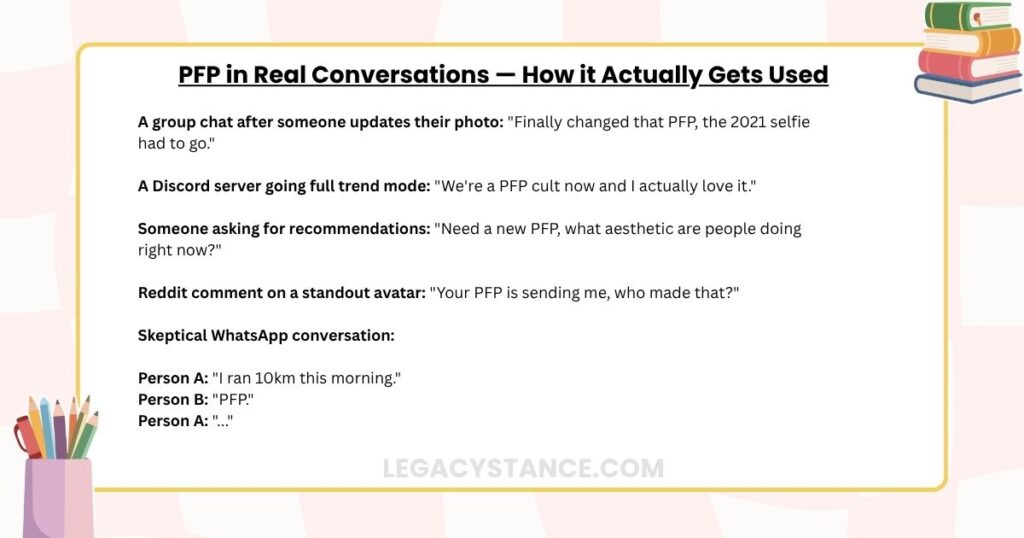
A group chat after someone updates their photo: “Finally changed that PFP, the 2021 selfie had to go.”
A Discord server going full trend mode: “We’re a PFP cult now and I actually love it.”
Someone asking for recommendations: “Need a new PFP, what aesthetic are people doing right now?”
Reddit comment on a standout avatar: “Your PFP is sending me, who made that?”
Skeptical WhatsApp conversation:
Person A: “I ran 10km this morning.”
Person B: “PFP.”
Person A: “…”
PFP vs. Avatar vs. Display Photo
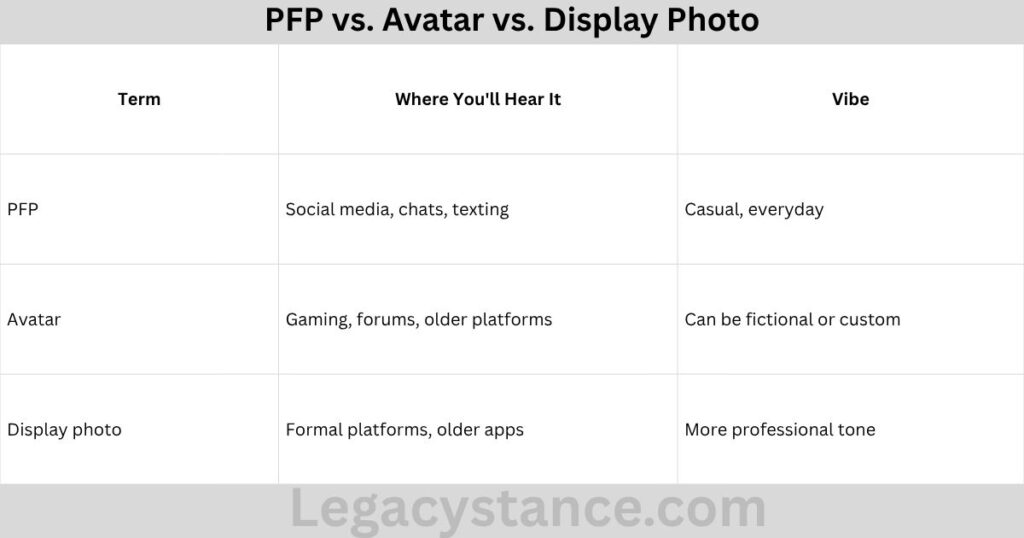
These all point to the same thing, but with small differences worth knowing:
| Term | Where You’ll Hear It | Vibe |
| PFP | Social media, chats, texting | Casual, everyday |
| Avatar | Gaming, forums, older platforms | Can be fictional or custom |
| Display photo | Formal platforms, older apps | More professional tone |
In real conversations today, PFP is the default. Nobody says “I love your display photo” in a text.
Read more:
FTM Meaning: What It Means in Texts and Everyday Conversations
What Does BTA Mean? (And Why the Same Letters Confuse So Many People)
FAQ’s
Does PFP ever mean something outside social media?
In formal business writing, PFP can stand for “Pay for Performance” or “Partnership for Peace.” But in any online chat, text, or comment section, it means profile picture or picture for proof — never a corporate term.
What exactly is a PFP cult?
When a large group of users all switch to the same profile picture — same meme, same character, same image — that’s a PFP cult. It’s a group identity trend, mostly on TikTok and Discord. No pressure, no rules. It just spreads the way trends do.
Does not having a PFP actually matter?
More than people think. A blank or default profile picture makes an account look inactive or fake to new people. Any image — real photo, illustration, meme — signals that a real person is behind the account.
How do you know which meaning someone is using?
Look at what came before it. If the conversation is about profiles, social media, or appearance — profile picture. If someone just made a claim and the other person responded with PFP — they want proof. When genuinely unclear, just ask.