Fashion is built around change. Colors move in and out of favor, silhouettes expand and contract, and items that seem unavoidable one season can virtually disappear a few years later. Yet certain clothes remain remarkably resistant to that cycle.
A good wool sweater, white shirt, simple coat, straight-leg jeans, or pair of leather boots can belong to several decades without looking obviously trapped in any of them. Their longevity is rarely accidental. These clothes tend to combine practical function, recognizable design, adaptable proportions, and materials that become familiar rather than irrelevant with age.
Practical Origins Give Clothes a Strong Foundation
Many enduring garments were originally created to solve a practical problem rather than to satisfy a short-lived fashion movement. Trench coats developed around protection from bad weather, denim was valued for durability, and heavy knitwear provided warmth in demanding conditions.
That practical foundation can give clothing an identity strong enough to survive changing trends. The Aran sweater is a particularly good example. Originating from Ireland’s Aran Islands and associated with practical clothing for island communities, its distinctive cable and textured knitting eventually moved far beyond its original environment.
Today, Aran Sweater Market continues that connection between traditional Irish knitwear and contemporary wardrobes. A classic Aran sweater can be worn with jeans, tailored trousers, boots, skirts, or layered beneath a coat, which helps explain why the style can move between generations without needing to be completely reinvented.
When an item remains genuinely useful, fashion has less reason to discard it.
Simple Shapes Leave More Room for Reinvention
Clothes tend to date quickly when their identity depends heavily on an extreme silhouette. Very unusual proportions can become closely associated with the period in which they were popular.
Simpler shapes have more freedom.
A crew-neck sweater is not tied to one specific styling formula. It can appear relaxed over a T-shirt, more polished with trousers, or layered beneath a jacket. A straightforward wool coat can work with formal clothing one day and denim the next.
This adaptability allows the wearer to change the context instead of replacing the garment itself.
Even timeless pieces evolve slightly. Trouser widths change, jackets become shorter or longer, and knitwear moves between fitted and oversized proportions. But the fundamental garment remains recognizable underneath those adjustments.
That distinction is important. Timeless clothing does not necessarily remain completely unchanged. Instead, its basic design is strong enough to accommodate small shifts without losing its identity.
Good Materials Often Look Better With Time
Some clothes become less attractive as they age. Others acquire character.
Leather is perhaps the clearest example. A well-used leather jacket or pair of boots can develop variations in texture and color that make the item more distinctive. Denim behaves similarly, gradually adapting to the wearer rather than remaining perfectly uniform.
Quality wool and other natural fibers can also contribute to longevity when they are cared for appropriately. Their tactile qualities provide interest even when the garment itself has a very simple shape.
This is one reason material choice matters so much in classic clothing. When the design is restrained, fabric has to carry more of the visual character.
A plain wool sweater can feel substantially different from an inexpensive imitation even when both have nearly identical silhouettes. The difference appears in weight, texture, drape, warmth, and the way the garment responds to repeated wear.
Clothes people enjoy touching and wearing are naturally more likely to remain in their wardrobes.
Versatility Protects a Garment From Fashion Cycles
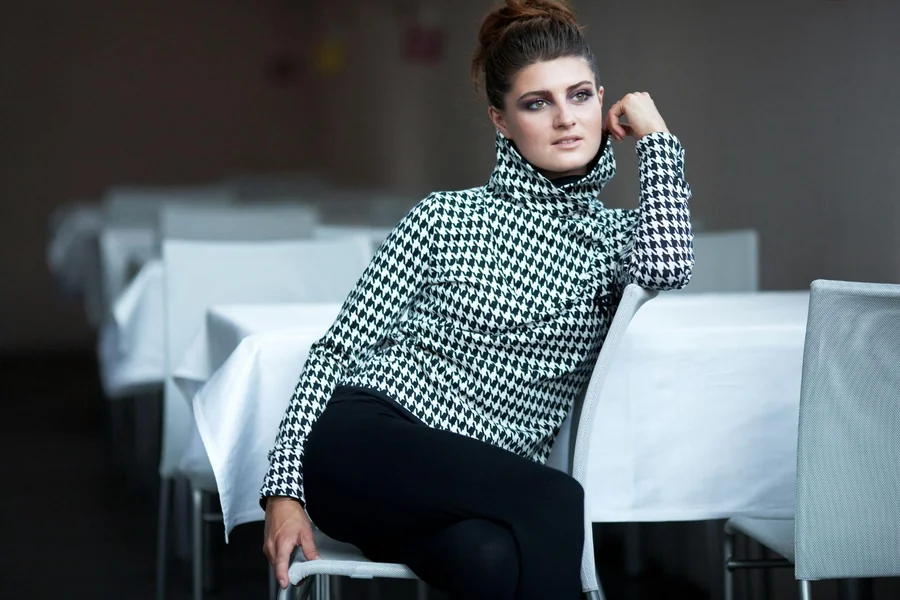
One of the best predictors of whether clothing will survive for years is the number of situations in which it can be worn.
A highly specific piece may look fantastic with one particular outfit but become difficult to use once that styling combination disappears. A versatile garment can continually find new partners.
Consider a white shirt. It can be worn with a suit, tucked into jeans, left open over a T-shirt, combined with a skirt, or layered beneath knitwear. The shirt does not need to change every time the surrounding fashion changes.
The same applies to loafers, simple sneakers, wool coats, denim jackets, and many forms of knitwear.
Versatility also reduces the pressure to own large quantities of clothing. When one sweater works with five pairs of trousers and several jackets, it becomes far more valuable than something requiring a specific combination every time it leaves the wardrobe.
The clothes that survive longest are often the easiest ones to wear differently.
Cultural Meaning Can Make Clothing Bigger Than a Trend
Some garments endure because they represent more than their appearance.
A particular item may be connected with a profession, region, musical movement, sporting culture, historical period, or national tradition. Once clothing acquires that kind of meaning, it becomes harder for a seasonal fashion cycle to make it irrelevant.
Different generations can also reinterpret the same garment. A sweater once associated primarily with practical workwear can later appear in films, fashion photography, street style, and contemporary collections without losing its original identity.
This creates an unusual combination of familiarity and freshness. People recognize the garment, but each generation discovers a slightly different way to wear it.
That cultural history can also make an older piece feel more interesting rather than less desirable. Instead of looking outdated, visible heritage becomes part of its appeal.
Personal Style Matters More Than Constant Novelty
The longer someone develops their own style, the easier it becomes to recognize the difference between liking an item and liking the moment surrounding it.
A dramatic trend can be exciting precisely because it looks new. That does not necessarily mean it will continue to feel natural once the novelty disappears.
Classic clothing works differently. The appeal may be quieter initially, but repeated wear often makes the garment more valuable. It becomes associated with particular combinations, occasions, and even periods of someone’s life.
This is how personal uniforms gradually develop. Someone realizes they consistently feel good in straight jeans, knitwear, boots, and a long coat, while another person repeatedly returns to shirts, tailored trousers, and loafers.
Neither wardrobe needs to ignore trends completely. New colors, accessories, or proportions can keep familiar clothing feeling current without requiring the entire closet to be rebuilt every season.
The Best Test Is Whether You Still Want to Wear It
Calling something “timeless” does not guarantee that everyone will want it forever. Personal taste changes, bodies change, lifestyles change, and even exceptionally well-made clothing can eventually stop serving its owner.
The more useful question is whether the garment has qualities that remain appealing after its initial novelty disappears.
Does it combine easily with other clothes? Is it comfortable? Does the material still look good? Can it be styled in several ways? Would you wear it even if nobody were currently calling it fashionable?
When the answers are yes, the piece has a much better chance of staying in regular rotation.
That is ultimately why some clothes never really disappear. They were useful before they were fashionable, and they remain useful after a particular trend has moved on. Their proportions are adaptable, their materials have character, and their identity is strong enough to survive different styling eras.
Fashion will always need novelty. A good wardrobe does not. Sometimes the clothes that feel most relevant are the ones that have already proved they do not need to change very much at all.