
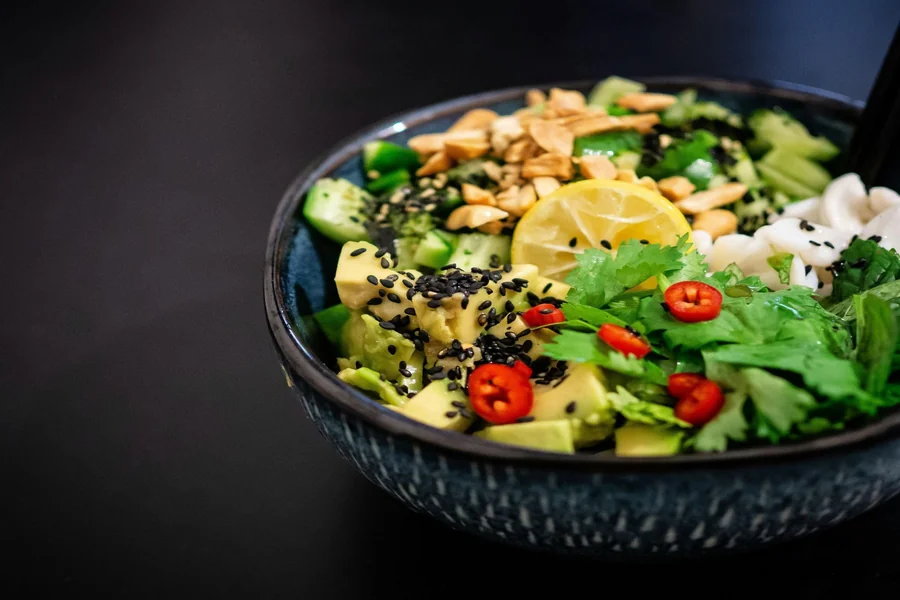
Eating reasonably well can create a reassuring feeling that nutrition has been handled. You cook at home, eat vegetables, avoid living on takeout, and generally choose foods that seem balanced. Surely that means you are getting everything your body needs.
Not necessarily. A diet can look healthy overall while still being repetitive enough to leave certain nutritional gaps. What matters is not whether every meal is perfect, but whether your usual pattern provides enough variety across vegetables, fruits, whole grains, proteins, fats, and other nutrient-dense foods.
Your Gut May Need More Variety Than Your Menu Provides
One of the easiest traps is eating the same healthy foods repeatedly. Oatmeal every morning, the same salad at lunch, chicken with broccoli at dinner, it can be nutritious, but variety remains limited.
Different foods provide different combinations of vitamins, minerals, fibers, and plant compounds. Rotating vegetables, fruits, grains, legumes, nuts, and seeds can therefore be more useful than searching for a single supposedly perfect food.
Nutrition and digestive health are also closely connected, which is why people examining possible gaps may explore best vitamins for gut health. The broader point, however, is that supplements should complement genuine nutritional needs rather than compensate automatically for a narrow diet.
Before adding something new, it is worth looking at what actually appears on your plate across an entire week.
Fiber Can Be Low in an Otherwise Good Diet
Someone can eat plenty of nutritious foods and still consume relatively little fiber. This is particularly easy when meals revolve around meat, eggs, dairy, white rice, refined bread, and relatively small servings of vegetables.
Fiber-rich foods include beans, whole grains, vegetables, fruits, nuts, and seeds. Adding them does not require completely redesigning familiar meals.
Breakfast can include oats, berries, or seeds. Beans can be added to soups, salads, and stews. White bread or refined grains can sometimes be replaced with whole-grain alternatives, while fruit provides an easy snack that requires almost no preparation.
If fiber intake has previously been fairly low, increasing it gradually is generally more comfortable than suddenly loading every meal with large quantities of beans, bran, and raw vegetables.
A healthy diet is easier to maintain when changes are manageable rather than extreme.
Vitamin D Can Be Difficult to Get From Food Alone
Vitamin D is an interesting example because an otherwise varied diet does not necessarily guarantee adequate intake. Relatively few foods naturally contain substantial amounts, although fortified foods can contribute depending on what someone regularly consumes.
Individual circumstances matter as well, so guessing deficiency from diet alone is not particularly useful.
If there is a genuine concern about vitamin D status, discussing testing and appropriate intake with a healthcare professional can provide a much clearer answer than randomly selecting a high-dose supplement.
This illustrates a larger principle that applies to micronutrients generally. More is not automatically better. Vitamins and minerals are essential, but supplements can provide amounts far beyond what would normally be obtained through food.
The objective should be adequacy, not accumulating the largest possible number of nutrients from pills, powders, fortified foods, and drinks simultaneously.
Calcium May Disappear When Your Eating Habits Change

Dietary changes can unintentionally remove familiar nutrient sources.
Someone who stops drinking milk, for example, may replace it with a plant-based beverage without checking whether the alternative is fortified. Another person might reduce dairy substantially while concentrating on vegetables and lean proteins, leaving calcium intake lower than expected.
Dairy products can provide calcium, but they are not the only option. Depending on individual dietary preferences, fortified alternatives and certain other foods can contribute as well.
This is why evaluating what replaced a food can be more useful than simply deciding whether removing it was “healthy.”
The same principle applies to many restrictive eating patterns. Eliminating an entire food group can be appropriate for medical, ethical, cultural, or personal reasons, but the nutrients previously supplied by those foods still need to come from somewhere.
A balanced diet is ultimately about what is included, not simply what has been removed.
Iron and B12 Deserve Attention in Certain Diets
Nutritional needs differ considerably between people, which makes generic lists of “missing nutrients” inherently limited.
Iron is particularly relevant for some groups, including menstruating women, while people following vegetarian or vegan diets may need to think more deliberately about where certain nutrients come from. Research comparing different dietary patterns has found that nutritional gaps can occur in plant-based and meat-containing diets, although the nutrients most likely to be inadequate can differ. (PubMed Central (PMC))
Vitamin B12 deserves particular attention in vegan diets because reliable dietary sources are primarily associated with animal-derived and fortified foods.
Again, supplementation should be purposeful. Someone who suspects an iron or B12 deficiency because of symptoms such as persistent fatigue should not assume the cause and begin taking large doses independently. Appropriate medical evaluation can determine whether a deficiency actually exists and what should be done about it.
Magnesium and Potassium Can Hide in Plain Sight
Some nutritional gaps are less obvious because the nutrients involved rarely receive the attention given to protein or vitamin C.
Magnesium is found across foods such as nuts, seeds, legumes, whole grains, and leafy vegetables. Potassium appears in numerous fruits, vegetables, beans, dairy products, and other everyday foods. Yet population-level dietary data show that magnesium and potassium intake can still fall short. (PubMed Central (PMC))
The solution is refreshingly ordinary: increase the variety of nutrient-dense whole foods rather than hunting for exotic ingredients.
A baked potato, beans, leafy vegetables, yogurt, nuts, seeds, whole grains, and fruit may not look like a sophisticated nutritional strategy. That is precisely the point.
Many nutritional gaps occur not because the necessary foods are obscure, but because modern diets repeatedly select from a relatively small pool of convenient favorites.
Supplements Cannot Tell You What Your Diet Is Missing
Walking into a supplement aisle can create the impression that every possible dietary weakness has a bottle designed to correct it. The harder question is whether you actually need what is inside.
Health authorities generally recommend meeting nutritional requirements primarily through a varied, nutrient-dense eating pattern. Supplements can be appropriate when food alone does not provide enough of a particular nutrient or when individual circumstances create additional requirements, but they are not substitutes for dietary variety. (NCCIH)
It can therefore be useful to examine a normal week of eating before assuming there is a deficiency. Are vegetables genuinely varied, or is it always the same two? Are there regular whole grains and legumes? What are your calcium sources? Are fruits, nuts, and seeds actually eaten or merely purchased occasionally?
Eating well is not an all-or-nothing achievement. A diet can be generally excellent and still have room for improvement. Often, the answer is not another restrictive rule or a cabinet full of supplements. It is simply making an already decent diet broader, more varied, and better matched to your individual nutritional needs.