The S&P 500 is widely regarded as one of the most important stock market indexes in the world. Comprising 500 of the largest publicly traded companies in the United States, it serves as a benchmark for the overall health of the American economy and a guide for investors seeking insight into market sentiment.
Because the index includes major businesses from sectors such as technology, healthcare, finance, consumer goods, energy, and communications, its value can be influenced by a wide range of economic and corporate factors. Understanding these influences can help investors better interpret market movements and the forces that drive stock prices higher or lower.
As financial forecasting has become increasingly popular, many investors now follow not only traditional market analysis but also platforms such as DraftKings Prediction Market, where participants monitor future economic and financial outcomes as part of broader market discussions.
Corporate Earnings
Perhaps the single biggest driver of the S&P 500 is corporate earnings.
The value of a stock ultimately reflects expectations about a company’s future profitability. When large S&P 500 companies report strong earnings, investors often become more optimistic about future growth, which can push stock prices higher.
Companies such as major technology firms, financial institutions, and consumer brands carry significant weight within the index. Because of this, strong or weak earnings reports from a relatively small number of influential businesses can have a noticeable impact on the overall performance of the S&P 500.
Investors pay particularly close attention to earnings guidance, which provides clues about future business conditions and management expectations.
Interest Rates
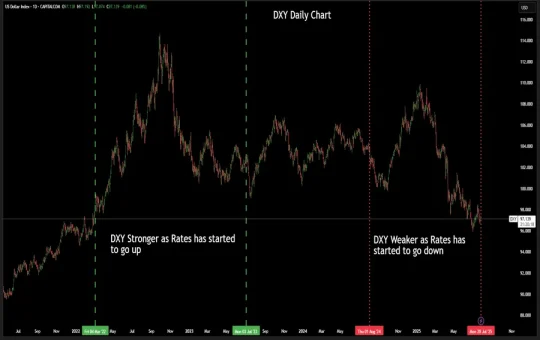
Interest rates play a major role in determining stock valuations.
When central banks maintain lower interest rates, borrowing typically becomes cheaper for businesses and consumers. This can encourage spending, investment, and economic growth, all of which may benefit corporate earnings.
Lower rates can also make stocks more attractive compared with savings accounts or fixed-income investments, encouraging investors to allocate more money toward equities.
Conversely, higher interest rates can place pressure on stock valuations by increasing borrowing costs and reducing future profit expectations. Growth-oriented companies are especially sensitive to changes in the interest-rate environment because much of their value depends on future earnings projections.
Inflation
Inflation is another critical factor influencing the index.
Moderate inflation is often a sign of a healthy economy, but persistently high inflation can create challenges for companies and consumers alike. Rising prices may increase operating costs, squeeze profit margins, and reduce consumer purchasing power.
When inflation accelerates unexpectedly, investors often worry that central banks may respond with tighter monetary policies, which can increase market volatility.
On the other hand, signs that inflation is easing frequently provide reassurance to markets that economic conditions may be stabilizing.
Economic Growth
The strength of the broader economy has a substantial effect on the S&P 500.
Strong economic growth generally leads to increased consumer spending, business investment, job creation, and corporate profitability. These conditions often support rising stock prices.
Economic indicators commonly monitored by investors include:
- Gross Domestic Product (GDP)
- Employment figures
- Consumer spending data
- Manufacturing activity
- Retail sales
- Business confidence surveys
Positive economic data can boost market sentiment, while weak economic reports may trigger concerns about slowing growth or recession risks.
Technology Sector Performance
The technology sector represents one of the largest components of the S&P 500.
Major technology companies account for a substantial portion of the index’s overall market capitalization. As a result, movements in this sector can strongly influence the direction of the entire index.
Advances in artificial intelligence, cloud computing, semiconductors, cybersecurity, and digital services have increased the importance of technology firms within the modern economy.
When investors become optimistic about innovation and future technology growth, technology stocks often perform well, providing support to the broader index.
Investor Sentiment
Market psychology plays an important role in stock market performance.
Investor sentiment reflects how market participants feel about future prospects. Optimism can encourage buying activity, while fear and uncertainty often cause investors to become more cautious.
Sentiment can be influenced by:
- Economic news
- Corporate announcements
- Geopolitical developments
- Market trends
- Consumer confidence
Because markets frequently react to expectations rather than current conditions alone, sentiment can sometimes drive substantial movements even before economic changes become visible in official data.
Global Events
Although the S&P 500 focuses on American companies, many of those businesses generate significant revenues internationally.
As a result, global events can have a major impact on index performance. Trade disputes, geopolitical tensions, supply-chain disruptions, energy price fluctuations, and international economic conditions can all affect corporate earnings expectations.
Many large companies within the S&P 500 operate on a global scale, making international developments an important consideration for investors.
Consumer Spending
Consumer spending accounts for a significant portion of economic activity in the United States.
When consumers feel financially secure, they tend to spend more on goods and services. This increased spending supports revenue growth across multiple sectors, including retail, technology, travel, entertainment, and consumer products.
Strong employment conditions and rising wages often encourage spending activity, while economic uncertainty may cause consumers to reduce expenses.
Because many S&P 500 companies rely heavily on consumer demand, spending trends remain a key market indicator.
Government Policy
Government decisions can influence the index in various ways.
Changes in taxation, regulation, infrastructure spending, trade policy, and business incentives can affect corporate profitability and investor confidence.
Certain industries may benefit more than others from policy changes. For example, healthcare, energy, financial services, and technology sectors often react strongly to regulatory developments.
Investors therefore closely monitor government announcements when evaluating future market conditions.
Market Liquidity
Liquidity refers to how easily assets can be bought and sold without causing significant price changes.
Periods of strong liquidity often support market growth because more capital is available for investment. Financial conditions, credit availability, and institutional investment activity can all influence liquidity levels.
When liquidity tightens, markets may experience increased volatility as investors become more selective about deploying capital.
Why the S&P 500 is the Epicentre
The S&P 500 remains one of the most closely watched financial indicators because it captures the performance of many of the largest and most influential companies in the world. Its movements reflect not only corporate profitability but also broader economic conditions, investor sentiment, monetary policy, and global developments.
While no single factor determines the direction of the index, understanding the combined influence of earnings, interest rates, inflation, economic growth, technology performance, and market psychology can provide valuable insight into why the market rises and falls.
For long-term investors and market observers alike, the S&P 500 serves as a powerful window into the health of both corporate America and the wider global economy.