
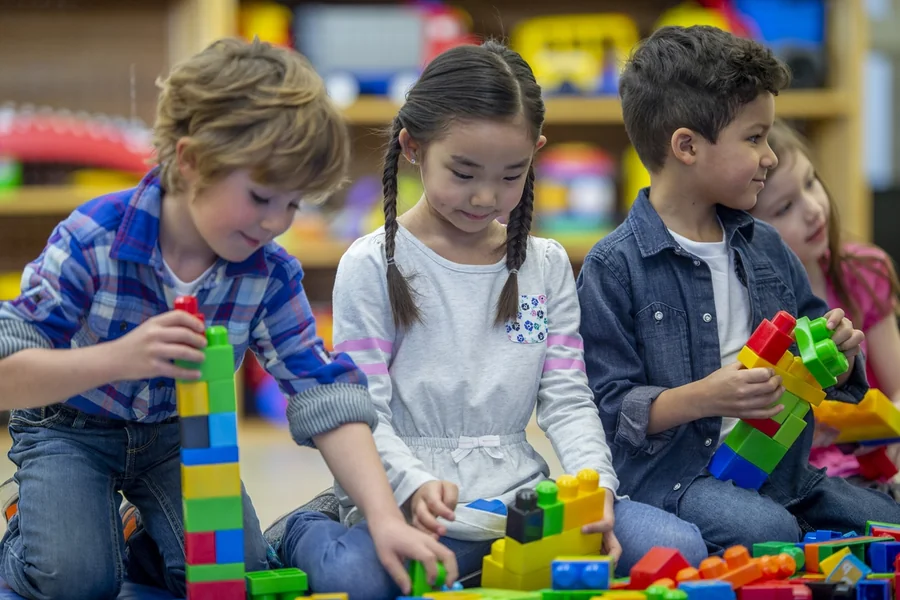
Social skills play an important role in everyday life because they help people communicate, build relationships, participate in activities, and respond appropriately to different situations. For children and individuals who experience challenges with social communication, learning these skills may require additional guidance, practice, and structured support. Social development can involve many different abilities, including starting conversations, taking turns, recognizing social cues, expressing needs, listening to others, and participating in group activities. ABA therapy for social skills can use structured teaching methods to help learners practice specific behaviors in meaningful situations. The approach can be individualized according to a person’s abilities, goals, preferences, and everyday needs. Rather than expecting social abilities to develop in exactly the same way for everyone, practitioners can identify specific areas that need support and create opportunities for repeated practice. With consistent instruction and appropriate reinforcement, learners may develop greater confidence and become better prepared to participate in social environments.
Understanding Social Skills Development
Social skills include a broad range of behaviors that people use when interacting with others. A child may need to learn how to greet someone, respond when their name is called, request assistance, share materials, wait for a turn, or maintain an appropriate interaction. Older children may work on more complex abilities such as joining conversations, understanding another person’s perspective, recognizing emotions, or handling disagreements. These skills can affect experiences at home, school, community activities, and later workplace environments. Some learners may naturally acquire these behaviors through observation and everyday interaction, while others may benefit from explicit instruction. ABA therapy for social skills focuses on identifying observable behaviors and creating structured opportunities to practice them. The goal is generally to make social learning understandable and functional rather than relying solely on abstract explanations. Progress can be monitored over time so that teaching strategies can be adjusted when a learner’s needs or abilities change.
How Structured Teaching Can Help
Structured teaching can make complicated social behaviors easier to understand by separating them into smaller, manageable steps. For example, starting a conversation may involve approaching another person, gaining their attention, offering a greeting, asking a relevant question, listening to the response, and continuing the interaction. Teaching each component individually can help a learner understand what is expected before combining the skills into a more natural exchange. ABA therapy for social skills may incorporate modeling, prompting, practice opportunities, and reinforcement to support learning. The specific teaching strategy can vary depending on the learner and the skill being addressed. Some learners may respond well to visual supports, while others may benefit from demonstrations, role-playing, or repeated practice during everyday activities. Breaking a skill into smaller components can also make progress easier to observe and measure. Over time, individual steps can be combined so that the learner has opportunities to use the skill more independently.
Building Communication Skills
Communication is closely connected to social development, and effective social interaction often depends on being able to express thoughts, needs, questions, and feelings. Communication may involve spoken language, gestures, facial expressions, body language, signs, or augmentative and alternative communication systems. A learner who has difficulty communicating may become frustrated when others do not understand what they need. Teaching functional communication can provide more effective ways to participate in interactions and reduce situations in which communication barriers interfere with daily activities. ABA therapy for social skills can incorporate communication goals into natural interactions, such as requesting an item, responding to a question, commenting on an activity, or asking someone to join a game. Practicing these skills in meaningful situations can help learners understand why communication is useful. The objective should be functional and respectful communication that supports the individual’s ability to participate and express themselves.
Learning to Take Turns
Turn-taking is a fundamental social skill that appears in many everyday activities, including conversations, games, classroom activities, and family interactions. Some learners may find it difficult to wait while another person speaks or completes an activity, particularly when they are highly interested in participating. Teaching turn-taking can begin with simple activities involving clear and predictable sequences. A practitioner may demonstrate taking a turn, provide a cue when it is the learner’s turn, and reinforce successful participation. ABA therapy for social skills can provide repeated opportunities to practice this behavior in different activities so that the learner does not associate turn-taking with only one particular game or situation. Gradually, prompts can be reduced as the learner becomes more independent. The skill can then be practiced with different people, materials, and environments. This type of generalization is important because the ultimate purpose of social learning is to help the learner participate more effectively in everyday interactions.
Recognizing Social Cues
Social interactions involve many cues that are not communicated through words alone. Facial expressions, gestures, tone of voice, body posture, and changes in another person’s behavior can provide information about what someone may be communicating. Some individuals may have difficulty noticing or interpreting these cues, which can make social situations confusing. Teaching can involve helping learners identify observable cues and connect them with possible meanings without assuming that every person communicates in exactly the same way. ABA therapy for social skills may use pictures, role-play scenarios, videos, modeling, and real-life practice to help learners notice relevant information during interactions. For example, a learner may practice identifying when another person is looking toward them, waiting for a response, or indicating that an activity has ended. Teaching should allow room for individual differences and should avoid treating natural variations in communication style as automatically problematic. The focus can remain on skills that improve understanding, participation, safety, and meaningful connection with others.
Developing Conversation Skills
Conversation involves more than simply speaking because successful interaction requires listening, responding, asking questions, staying connected to a topic, and recognizing opportunities for another person to contribute. Learners may need direct practice with these different components. A practitioner might begin with short exchanges and gradually introduce longer conversations as the learner becomes comfortable. Questions can be practiced using familiar topics before expanding to less predictable situations. ABA therapy for social skills can incorporate role-playing to provide a structured environment where learners can practice greetings, questions, responses, comments, and appropriate ways to end a conversation. Reinforcement and feedback can help the learner understand which behaviors supported the interaction. Practice can then move into naturally occurring situations with family members, peers, teachers, or other communication partners. This gradual approach can help bridge the difference between practicing a conversation in a structured setting and participating in real-world social interactions.
Supporting Emotional Understanding
Recognizing and communicating emotions can contribute significantly to successful social interaction. Learners may benefit from identifying basic emotions such as happiness, sadness, anger, fear, or excitement before moving toward more nuanced emotional experiences. Instruction can include pictures, stories, role-play, facial expressions, and discussions about situations that may lead to particular feelings. It is important to recognize that facial expressions and emotional responses can vary between individuals, so teaching should avoid relying on rigid assumptions. Instead, learners can practice gathering information from multiple cues and checking what another person means when something is unclear. Emotional communication also includes learning appropriate ways to express one’s own feelings and request support. These skills can make it easier to navigate disagreements, changes in plans, and challenging social situations. With repeated practice, learners can develop strategies for communicating emotions in ways that are understandable and useful in their everyday environments.
Practicing Social Skills Through Play
Play provides many natural opportunities for learning social behaviors because children can practice communication, cooperation, flexibility, and shared attention while participating in enjoyable activities. Games can teach waiting, following rules, taking turns, accepting changes, and responding to another person’s actions. Pretend play can provide opportunities to practice different conversations and social scenarios in a low-pressure environment. ABA therapy for social skills may incorporate play-based activities when they are appropriate for the learner’s interests and developmental needs. Using preferred activities can increase engagement and provide more opportunities for meaningful practice. The practitioner can gradually introduce new interaction partners or adjust the rules to encourage flexibility. Importantly, social learning should not require a child to abandon harmless personal preferences or natural behaviors simply to appear more typical. The focus can remain on building functional abilities that help the learner communicate, participate, and enjoy interactions with others.
Encouraging Peer Interaction
Peer relationships can provide valuable opportunities to practice social skills because interactions with other children are often less predictable than interactions with adults. Learners may need support understanding how to approach peers, join an activity, respond to invitations, and handle differences in preferences. Structured peer activities can provide opportunities for practicing these behaviors while allowing adults to provide support when necessary. Over time, prompts can be reduced so that interactions become increasingly independent. Successful peer interaction does not mean that every conversation must last a particular amount of time or follow a fixed pattern. Instead, the learner can develop practical strategies for entering, maintaining, and leaving interactions comfortably. Teaching should also consider the preferences of both participants and encourage reciprocal interaction rather than placing the entire responsibility for communication on one child. Positive peer experiences can help make social participation more meaningful and motivating.
Generalizing Skills Across Situations
One of the most important aspects of social learning is generalization, which means using a learned skill across different people, activities, and environments. A learner may demonstrate a skill successfully during a structured session but have difficulty using it spontaneously at home, school, or in another setting. Practicing with different communication partners can help reduce dependence on one familiar person or environment. ABA therapy for social skills can include opportunities to practice behaviors in natural situations as well as structured teaching environments. For example, a greeting skill might first be practiced with a practitioner and later used with family members, teachers, or peers. Similarly, turn-taking can be practiced during different games and activities rather than being limited to one familiar routine. Careful observation can help identify situations where additional support is needed. Generalization is valuable because social skills are most useful when learners can apply them flexibly in everyday life.
The Importance of Individualized Goals
Every learner has a unique combination of strengths, preferences, communication abilities, challenges, and personal goals. Social skills programs should therefore avoid using identical objectives for every individual. One learner may benefit from focusing on functional communication, while another may already communicate effectively but need support with peer interaction or flexible participation. ABA therapy for social skills can be individualized by selecting goals that are meaningful and relevant to the person’s daily life. Families and caregivers can provide valuable information about situations that are particularly important at home or in the community. The learner’s own preferences should also be considered whenever possible, especially when selecting activities and communication goals. Clear, measurable objectives can make it easier to monitor progress and determine whether teaching strategies are working. Individualization helps ensure that intervention supports practical abilities rather than simply attempting to change behaviors without considering their purpose.
The Role of Families and Caregivers
Families and caregivers can play an important role in helping learners use social skills outside structured teaching sessions. Everyday routines provide many opportunities for practicing communication, turn-taking, requesting, conversation, and emotional expression. Caregivers can support consistency by using strategies recommended by the individual’s treatment team and creating natural opportunities for the learner to practice. For example, family activities can provide opportunities to request items, choose between options, participate in conversations, or wait for another person’s turn. It is also helpful to recognize and respond to the learner’s communication attempts rather than expecting perfect performance before providing attention or support. Consistent encouragement can make practice feel like a normal part of daily life instead of a separate task. Collaboration between caregivers and practitioners can help identify which skills are transferring successfully and which situations may require additional teaching or adaptation.
Measuring Progress Over Time
Measuring progress can help determine whether social-skills instruction is producing meaningful changes. Instead of relying only on general impressions, practitioners may track specific behaviors such as the number of independent communication attempts, successful turn-taking opportunities, appropriate responses, or instances of initiating interaction. Data can help identify patterns and determine whether a learner needs additional support or whether prompts can gradually be reduced. ABA therapy for social skills can use measurable objectives to monitor changes over time and guide adjustments to teaching strategies. Progress may not occur at the same pace for every skill, and some abilities may require longer periods of practice than others. It is also important to evaluate whether a skill is being used outside structured sessions. Functional improvement should be considered in relation to the learner’s daily experiences, independence, communication, relationships, and personal goals rather than relying exclusively on numerical measurements.
Creating Positive Social Experiences
Social learning is more likely to be meaningful when learners have opportunities to experience successful and enjoyable interactions. Activities should be selected with the individual’s interests and abilities in mind, and expectations should be adjusted when a task becomes unnecessarily difficult. Reinforcement can be used to encourage useful behaviors, but it should be implemented thoughtfully and in a way that respects the learner. Natural consequences, meaningful praise, access to preferred activities, and opportunities to continue engaging with others can all contribute to positive learning experiences. Social interaction should not become a constant performance test in which the learner feels pressured to respond correctly at every moment. Instead, teaching can focus on building practical skills that increase communication, autonomy, participation, and connection. When social activities are meaningful and respectful, learners may have more opportunities to discover forms of interaction that work well for them.
Conclusion
Social skills can influence many aspects of everyday life, from communication and friendships to participation in family, educational, and community activities. Some individuals may benefit from structured instruction that breaks complex social behaviors into understandable and achievable steps. ABA therapy for social skills can incorporate individualized goals, modeling, prompting, practice, reinforcement, and opportunities for generalization across different situations. Effective support should focus on meaningful communication and participation while respecting individual differences in personality, preferences, and communication style. Families, caregivers, educators, and practitioners can work together to create consistent opportunities for practice in natural environments. Progress can be monitored through specific, functional goals that reflect the learner’s needs and priorities. With appropriate individualized support, social-skills instruction can help learners develop practical strategies for communicating, participating, and building meaningful connections in ways that work for them.