
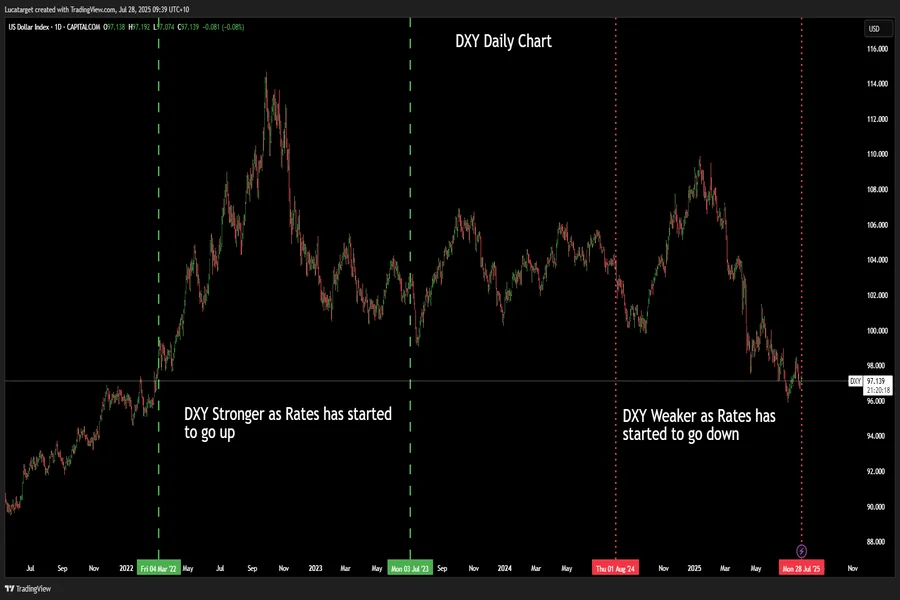
Currency markets can react quickly when central banks change interest rates or signal a new policy direction. Recent moves by the U.S. Federal Reserve and Bank of Japan have again highlighted how rate expectations can influence currencies.
These developments show why forex trading is closely linked to central-bank decisions. Markets look beyond the rate change itself, also considering future policy, inflation, and economic conditions when responding to currency movements.
Why Do Central Bank Rate Changes Affect Currency Markets?
Interest rates influence the relative appeal of holding one currency compared with another. When a central bank raises rates, assets linked to that currency may become more attractive, potentially increasing demand. A lower-rate environment can have the opposite effect, although broader economic conditions also matter.
Expectations are equally important. If a rate increase has already been widely anticipated, much of its effect may already be reflected in currency prices. A decision that differs from expectations can create a sharper reaction. This is why currency markets can move before a central-bank meeting.
The Policy Signals Behind Currency Moves
Central banks communicate more than their current interest-rate setting. Statements and official comments can offer clues about future policy and whether policymakers may raise, pause, or reduce rates.
1.Rate Expectations
Currency prices can respond to expected future rates rather than only the current level. Expectations of further increases may support a currency, while expected cuts can reduce demand.
2. Inflation Trends
Persistent inflation can encourage tighter policy. If price pressures ease, policymakers may have more room to slow or stop rate increases.
3. Economic Growth
Strong activity can support a higher-rate outlook, while weaker conditions may encourage a more cautious approach.
4. Policy Guidance
A change in central-bank language can alter expectations even when the official rate remains unchanged.
5. Interest-Rate Differences
Currency pairs compare two economies, so a changing rate gap can affect their relative strength.
Recent Fed and BOJ Rate Shifts
The latest decisions provide a useful example. On September 16, the Federal Reserve raised its target range by a quarter percentage point to 3.75%–4%. It said inflation remained elevated and indicated another increase could be possible later in the year. The dollar strengthened as markets reassessed the U.S. rate outlook.
On September 18, the Bank of Japan raised its policy rate from 1% to 1.25%, its highest level in decades. Governor Kazuo Ueda left the door open to further increases, but two policymakers opposed the move. The yen weakened despite the hike, showing that a higher rate does not automatically produce a stronger currency.
Currency Reactions to Changing Rate Expectations
Currency movements often reflect current policy and changing expectations together. A currency can strengthen before a rate increase if markets anticipate a more restrictive decision. It can also weaken after a hike if the announcement is less aggressive than expected. These shifts matter in forex trading, where expectations can move currency prices before a policy decision.
USD/JPY is a clear example. The pair has been sensitive to the difference between U.S. and Japanese policy expectations. Even though Japan raised rates, the yen weakened as markets focused on uncertainty surrounding the pace of future increases.
EUR/USD and GBP/USD can also respond to changing U.S. rate expectations. When expectations for U.S. rates rise relative to those in Europe or the United Kingdom, the dollar can gain support. Inflation, growth, and economic data can also change the picture.
Rate Differences Across Major Economies
The relationship between interest rates matters most when central banks follow different paths. One country may be tightening while another holds rates steady or considers reductions. These differences can change the relative appeal of currencies and influence currency pairs.
The current U.S.-Japan policy gap remains important for USD/JPY. The size and expected direction of that gap can influence demand for both currencies.
Similar comparisons apply across other major currencies. Looking at each central bank’s direction gives a clearer picture of currency-market forces.
Key Factors Shaping the Next Currency Moves
Upcoming economic data and central-bank communication will remain important for currency movements. Changes in inflation, employment, growth, and rate expectations can quickly alter how markets view the next policy decision.
1. Upcoming inflation and employment data
2. Central-bank speeches and policy statements
3. Changes in interest-rate expectations
4. Economic growth and consumer activity
5. Major developments affecting energy prices
A stronger inflation report may increase expectations for tighter policy, while weaker economic data may encourage a slower approach. As expectations change, currency pairs can respond.
Future data will help determine whether those policy directions remain intact.
The Role of Market Expectations
Market expectations connect central-bank decisions with actual currency movements. When expectations change sharply, price reactions can become more noticeable.
This explains why a central bank can raise rates and still see its currency fall. The market may have expected a larger increase or stronger guidance about future action. The BOJ’s latest decision illustrates this point, with the yen weakening even after the policy rate moved higher.
Expectations can shift before a meeting as new data and official comments change views about the next decision.
Key Points for Following Currency Moves
The following points can help put central-bank decisions into context. Looking at these signals together gives a clearer picture of the factors that may influence currency movements.
1. Compare the two central banks behind a currency pair
2. Watch expectations alongside actual rate decisions
3. Follow inflation and employment developments
4. Pay attention to policy guidance and official comments
5. Consider economic conditions beyond interest rates
When you consider these factors together, currency movements become easier to understand in the context of changing monetary policy.
Conclusion
Central bank rate shifts can influence currency markets through changing rate differences, expectations, inflation pressures, and policy guidance. The latest Fed and BOJ decisions show the relationship isn’t always simple: one currency strengthened after a rate hike, while another weakened despite a higher policy rate.
For anyone following forex trading, the main lesson is to look beyond the headline announcement. Future policy, economic data, and market expectations can be just as important as the rate decision itself. For this reason, currency analysis benefits from combining policy decisions with economic data and market expectations instead of relying on a single headline or rate move in isolation.