
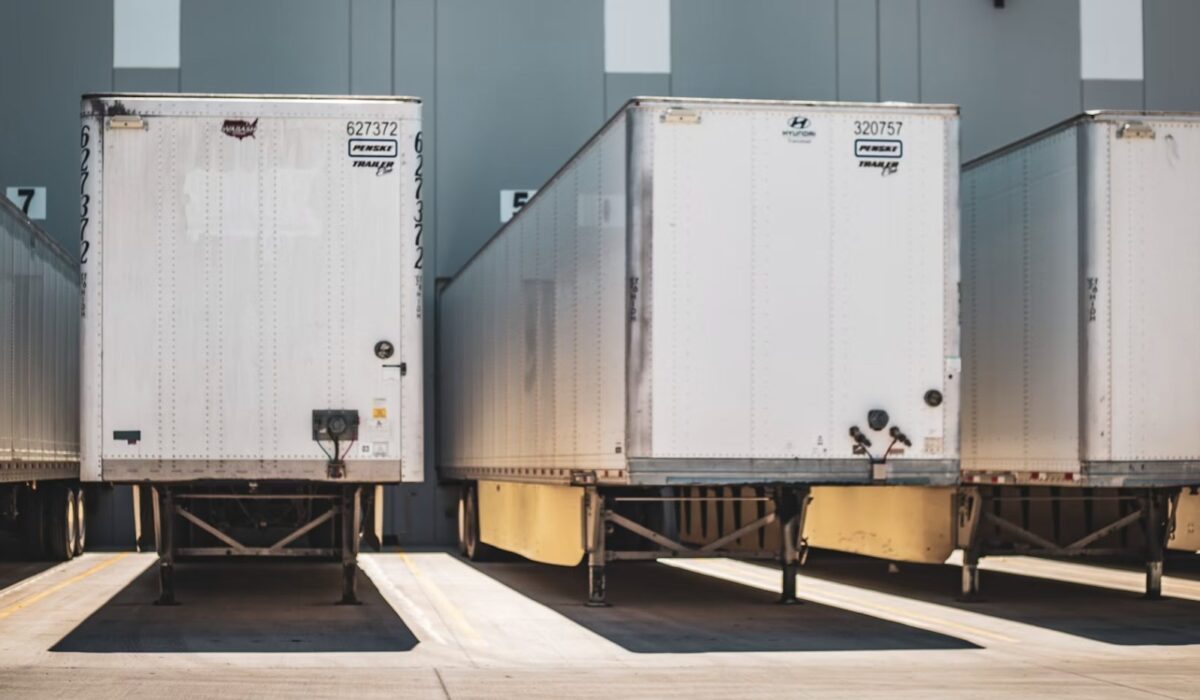
A dry van trailer is the most common freight equipment type in North America. Approximately 70 percent of all trucking freight moves in dry van configurations according to the American Trucking Associations. This familiarity has produced a set of confident misconceptions that cost shippers money, produce loading failures, and generate the kind of freight damage claims that take months to resolve.
Boxwheel, which manages a fleet that includes access to dry van trailer rental nationally, encounters these misconceptions in shipper conversations regularly. The corrections below are based on how dry van trailers actually function, not on how most shippers assume they do.
Misconception One: Any Forklift Reaches the Back of a 53-Foot Trailer
The structural correction: a 53-foot dry van trailer has an interior length of approximately 630 inches. A standard counterbalance forklift with a 6-foot mast typically has a reach limitation that keeps it from placing pallets further than 35 to 40 feet into a trailer from the dock opening.
Loading the rear sections of a 53-foot trailer from a standard counterbalance forklift requires the forklift to enter the trailer. This is a different loading protocol than dock-level forklift placement. The trailer floor must be rated for the forklift’s axle weight distribution when the forklift is inside the trailer, and the dock plate connection between the dock and the trailer must support the combined load.
A reach forklift (designed for narrow aisle warehouse applications) and a pallet jack (for hand-placing rear pallet positions) are the alternatives to driving a counterbalance forklift inside the trailer. The choice affects loading sequence, load density, and the time required to fully load the trailer.
Misconception Two: The Weight Limit Is 44,000 Pounds
The structural correction: the federal gross vehicle weight limit is 80,000 pounds. The maximum payload of a 53-foot dry van is approximately 44,000 to 46,000 pounds in the standard configuration. These are not interchangeable numbers, and the path from one to the other involves axle weight distribution that most shippers do not calculate.
The 80,000-pound GVW includes the tractor weight (approximately 15,000 to 20,000 pounds), the trailer weight (approximately 13,500 to 15,000 pounds for a standard aluminum dry van), and the payload. The math produces a payload ceiling of approximately 44,000 to 48,500 pounds depending on tractor and trailer weights.
But the axle weight limits matter independently of the gross weight limit. Federal regulations limit tandem axle weight to 34,000 pounds. The steer axle is limited to 12,000 pounds. A load that is within gross weight limits but concentrated toward the rear of the trailer produces tandem axle weights that exceed the per-axle limit even when the total is legal.
A 44,000-pound load uniformly distributed is legal. A 44,000-pound load concentrated in the rear 20 feet is potentially an axle weight violation regardless of what the scale reads for gross weight.
Misconception Three: a Dry Van Protects Freight From Temperature
The structural correction: a dry van trailer is not insulated. It is enclosed. These are different properties.
A standard dry van trailer is constructed with aluminum walls over wood framing with no insulation between the wall panels. On a July afternoon in Phoenix, with the trailer sitting in direct sun, the interior temperature of an empty dry van reaches 130 to 145 degrees Fahrenheit. On a February day in Minnesota with temperatures at minus 20, the interior temperature of a dry van approaches the ambient temperature within hours.
Freight that cannot tolerate temperature extremes does not belong in a dry van trailer on routes through extreme temperature environments, regardless of the transit time. Electronics, adhesive-backed products, certain food products, and items with low-temperature brittleness thresholds all have dry van route limitations that ambient temperature conditions determine.
Heated vans and temperature-controlled dry vans (which carry insulation and heating/cooling systems) exist precisely for this application. They cost more to rent. They protect product that a standard dry van does not.
Misconception Four: Pallets Are Interchangeable in Dry Van Configurations
The structural correction: pallet dimensions, pallet condition, and loading orientation all affect how many pallets fit in a 53-foot trailer and whether the load is structurally stable during transit.
A standard GMA (Grocery Manufacturers Association) pallet is 48 × 40 inches. Loaded in a standard two-across configuration with the 48-inch dimension running across the trailer width, 26 pallets fit in a 53-foot trailer.
A 42 × 42-inch pallet, common in the chemical industry, loads differently. Two-across placement leaves a 14-inch gap between the pallets and the trailer walls. This gap allows lateral pallet movement during transit unless the load is secured to prevent it.
Pallet condition affects load stability independently of configuration. A damaged GMA pallet with two broken deck boards is not a failed pallet at the warehouse. It is a potential load instability event on the highway when the pallet deck deflects under load and the freight above it shifts.
Misconception Five: the Door Seals on a Dry Van Trailer Exclude All Water
The structural correction: dry van trailer door seals are designed to resist rain splash and road spray, not to exclude water pressure from a sustained downpour or a flood event.
A trailer parked with its rear doors facing a sustained heavy rain on a slope where water runs toward the trailer accumulates water intrusion around the door seals. The seals flex and compress over the trailer’s service life. An older trailer with compressed seals in a sustained rain event accumulates water in the rear section of the trailer floor.
For freight that is moisture-sensitive, loading should never place the most moisture-sensitive product at the rear of the trailer within two to three feet of the door opening. Packaging specifications for dry van freight that includes moisture-sensitive content should account for the seal performance that an aging trailer delivers, not the seal performance that a new trailer delivers.
Key Takeaways
- Standard counterbalance forklifts do not reach the full depth of a 53-foot trailer from dock level. Loading the rear sections requires forklift entry or a different loading equipment type
- ATA data: approximately 70 percent of all trucking freight moves in dry van configurations
- Axle weight limits apply independently of gross weight limits. A legal-gross load concentrated toward the trailer rear produces tandem axle weight violations that gross weight compliance does not prevent
- Standard dry van trailers are enclosed but not insulated. Interior temperatures reach 130 to 145 degrees in hot ambient conditions and approach ambient temperature in cold conditions
- Trailer door seals resist rain splash and road spray, not sustained water pressure. Moisture-sensitive freight should not be positioned within two to three feet of the rear doors in older trailers with compressed seals
Familiarity with an equipment type and knowledge of how it actually functions are different things. The misconceptions above are built on familiarity. The corrections are built on function.
