Interior design has spent years moving through clean white walls, cool gray palettes, minimalist furniture, and spaces designed to look almost untouched. Those styles are not disappearing, but many interiors are becoming warmer, more textured, and more personal. Wood accent walls have naturally found their way back into that shift.
The difference this time is that the look is not limited to rustic cabins or farmhouse interiors. Modern wood walls can be light and understated, dark and dramatic, precisely arranged, or intentionally weathered. That flexibility has transformed an older decorating idea into something that works surprisingly well in contemporary homes.
Modern Wood Walls Look Very Different From Old Paneling
For anyone who remembers the dark wood-paneled rooms of previous decades, the idea of covering a wall with wood might initially sound dated. Contemporary versions are considerably different.
Instead of covering every wall with identical panels, designers can use wood selectively to create a focal point. Narrow vertical boards can emphasize ceiling height, horizontal planks can visually widen a wall, and different plank widths can produce a more relaxed appearance.
The material itself also provides enormous creative freedom. Homeowners planning this type of feature can explore the different woods, tones, textures, and applications available through https://woodplank.com/ to see how natural wood can become an intentional design element rather than simply another wall covering.
Homes Are Becoming Warmer Again
One reason wood works particularly well right now is the broader movement toward interiors that feel comfortable rather than perfectly polished. Highly minimalist rooms can be beautiful, but when smooth surfaces and neutral colors dominate everything, a space can sometimes lack visual depth.
Wood immediately introduces variation. Grain, knots, subtle differences in color, and the way individual boards respond to light prevent the surface from appearing completely uniform.
That natural irregularity can make an otherwise simple room feel more inviting without requiring additional furniture or decoration. A living room with white walls, a neutral sofa, and restrained furnishings can gain considerably more character from a single wood wall.
Texture Is Replacing Excess Decoration
Creating an interesting room does not necessarily require filling it with decorative objects. Increasingly, the surfaces themselves are doing more of the visual work.
A textured wall can create depth while allowing the rest of the room to remain relatively simple. This is particularly useful in smaller spaces where adding more furniture, shelves, artwork, and accessories can quickly create visual clutter.
Wood is especially effective because its texture changes subtly with lighting. Morning sunlight may emphasize grain and color variation, while lamps and directional lighting in the evening can create small shadows between planks. The wall consequently becomes part of the atmosphere of the room rather than functioning as a flat background.
One Wall Can Change the Balance of a Room
Not every room needs a major renovation. Sometimes the real problem is simply that nothing provides a strong visual anchor.
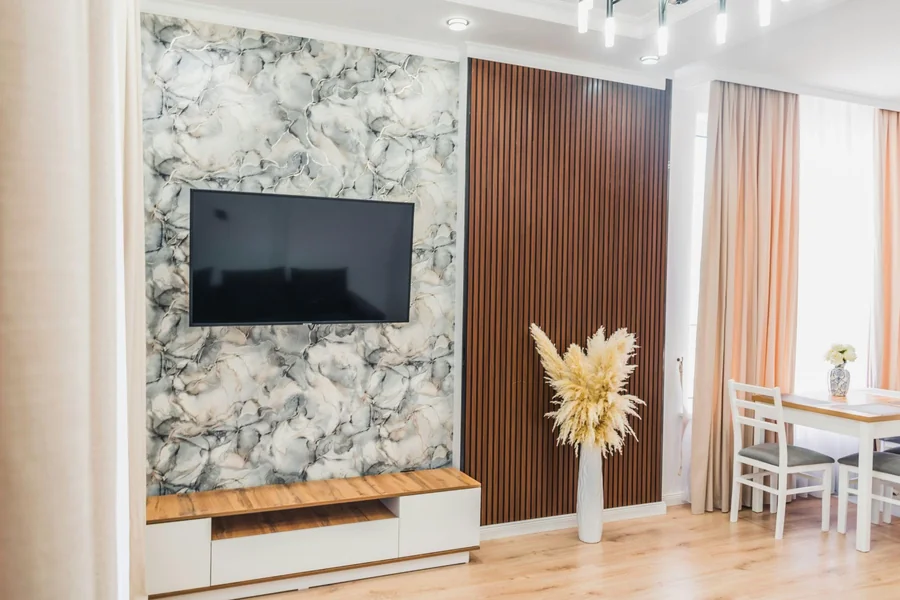
A wood feature wall can establish that focal point immediately. In a bedroom, the wall behind the bed is an obvious candidate because it can visually frame the sleeping area without requiring an oversized headboard. In a living room, wood can define the wall behind a sofa, fireplace, television, or shelving.
Dining rooms, entryways, offices, and reading areas can benefit as well. The important consideration is choosing a wall that already has a natural reason to attract attention rather than adding wood randomly.
Wood Works With More Styles Than Expected
The return of wood accent walls is also connected to their versatility. Changing the species, finish, orientation, and surrounding materials can dramatically alter the final effect.
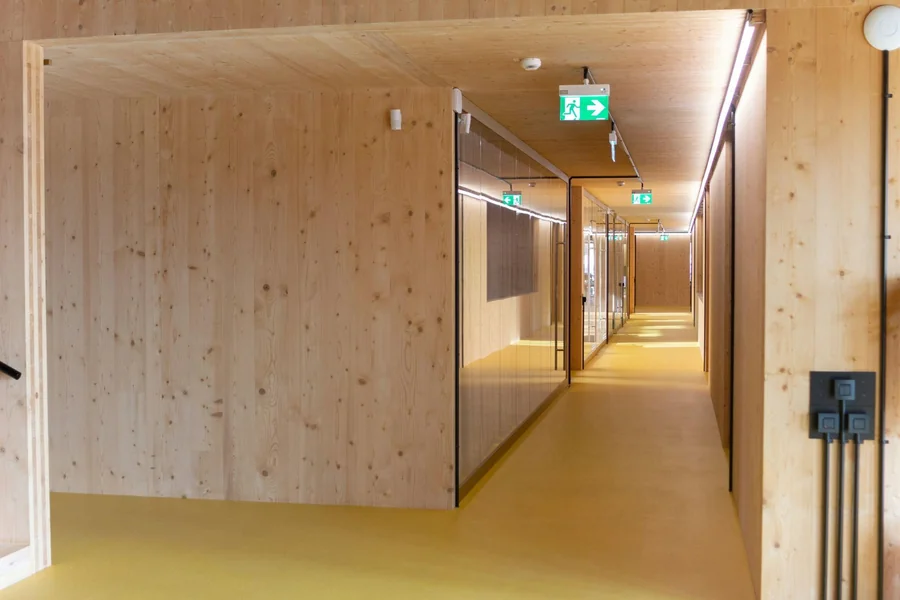
Pale woods paired with whites, creams, and simple furniture can produce a Scandinavian-inspired appearance. Richer brown tones can create a warmer, more traditional atmosphere. Weathered finishes introduce rustic character, while evenly spaced vertical slats can look distinctly contemporary.
Wood can also provide an effective counterpoint to materials such as metal, concrete, glass, and stone. Instead of competing with those harder surfaces, its natural grain can soften them and create a more balanced interior.
Natural Variation Makes Every Installation Different
Paint provides predictable color. Wallpaper provides a repeating design. Real wood brings something different because its grain and tonal variation are naturally inconsistent.
That means two installations using the same general material can still have their own character. Individual boards may contain different grain patterns, knots, markings, or variations in shade.
For interiors that have begun to feel overly standardized, those differences are valuable. They introduce personality without requiring bright colors or elaborate patterns. Even a restrained wood wall can become one of the most memorable features in a room simply because the material has natural visual movement.
It Can Make a Room Feel Finished Without Filling It
There is often a temptation to solve an empty wall by continually adding things to it: artwork, photographs, mirrors, shelves, plants, or decorative objects. Sometimes that works beautifully. Other times, the result becomes busier than intended.
A wood accent wall offers another approach. The wall itself becomes the decorative feature, which means very little may need to be placed in front of it.
This can be particularly effective in bedrooms and living rooms where a calmer environment is desirable. Instead of relying on numerous accessories to create interest, texture and material provide the character.
The Appeal Goes Beyond a Short-Lived Trend
Wood accent walls may currently be enjoying renewed attention, but the material itself has never depended entirely on one decorating trend. Wood has been used inside homes for centuries because it brings warmth, texture, and natural variation that are difficult to reproduce with flat surfaces.
What changes from decade to decade is how it is applied. Today’s interpretation is more selective and flexible, allowing one carefully chosen wall to introduce character without dominating an entire room.
That may ultimately explain why wood accent walls have returned so easily. They answer several current design priorities at once: warmer interiors, natural materials, stronger texture, fewer unnecessary decorations, and spaces that feel individual rather than standardized. This time around, the wood accent wall is less about recreating the past and more about using a familiar material in a distinctly modern way.