TMB stands for “Text Me Back” in most conversations. People use it when they want a reply without sounding too formal or pushy.
You Saw TMB and Got Confused
Someone just ended their message with “TMB” and you’re sitting there wondering if you missed something. Maybe it was in a group chat about weekend plans, or under a comment where you weren’t sure if they were talking to you. The annoying part? Depending on where you are and who’s texting, TMB might not even mean what you think it does.
The Vibe Behind Those Three Letters (What the Sender Means)
When someone uses TMB, they’re signaling intent — not urgency. It usually means “this matters enough that I’m hoping you reply,” without turning the message into something stiff or formal.
Most of the time, it’s practical. They need confirmation to make plans, finish a decision, or move forward. Other times, it carries a softer emotional layer — a quiet “I want to stay connected” or “don’t let this conversation die.”
What TMB isn’t supposed to be is pressure. It’s shorthand for interest, not entitlement. The sender is nudging the conversation, not demanding your attention.
Where You’ll Actually See It
TMB pops up when plans are in the air. Your friend texts “Beach this Saturday? TMB” because they need a yes or no to move forward. Someone posts their new gaming setup and comments “Rate it, TMB” because they’re fishing for compliments.
Group chats love TMB. When eight people are trying to figure out dinner and nobody’s committing, that one person will eventually say “Guys seriously TMB we need reservations.”
It sneaks into emotional moments too. After a long conversation dies out, someone might send “Miss talking to you, tmb sometime” as a soft way to keep the connection alive without demanding immediate attention.
Reading the Room (Where People Get It Wrong)
The meaning of TMB changes based on who sends it — and this is where misunderstandings happen.
A close friend using “TMB!!!” usually means excitement or impatience. The same message from a coworker or someone you barely talk to can feel pushy or uncomfortable. The letters don’t change, but the relationship does.
Punctuation and timing matter too.
- “tmb” in lowercase often means no pressure
- “TMB????” can signal frustration
- A sudden TMB after long response delays may be less about the message — and more about feeling ignored
The biggest mistake is assuming TMB always means “reply now.” Sometimes it’s just a temperature check: Are we still good? Are you still there?
📌 Key idea: TMB is easy to send, but easy to misread if you ignore context.
Places TMB Doesn’t Belong
Work emails or messages to your boss? Hard no. “Finished the report, TMB” makes you look like you don’t understand professional communication.
When someone just told you something serious—a breakup, a loss, family drama—replying with TMB is ice cold. They opened up and you’re asking them to keep the conversation going for you? Read the room.
First dates or early talking stages get weird with TMB fast. You don’t have the comfort level yet where it sounds friendly instead of entitled to someone’s attention.
And honestly? If you’re already texting back and forth easily, throwing in TMB just sounds impatient. Like, they’re clearly responding, why are you asking them to text back?
Say Something Else
Keeping it casual:
- “Lmk!”
- “What do you think?”
- “Get back to me when you can”
Being polite about it:
- “Let me know whenever you’re free”
- “No rush, just curious”
- “Would love your thoughts on this”
Playing around:
- “Don’t ghost me lol”
- “I’ll be waiting 👀”
- “Your turn”
Messages That Actually Use TMB
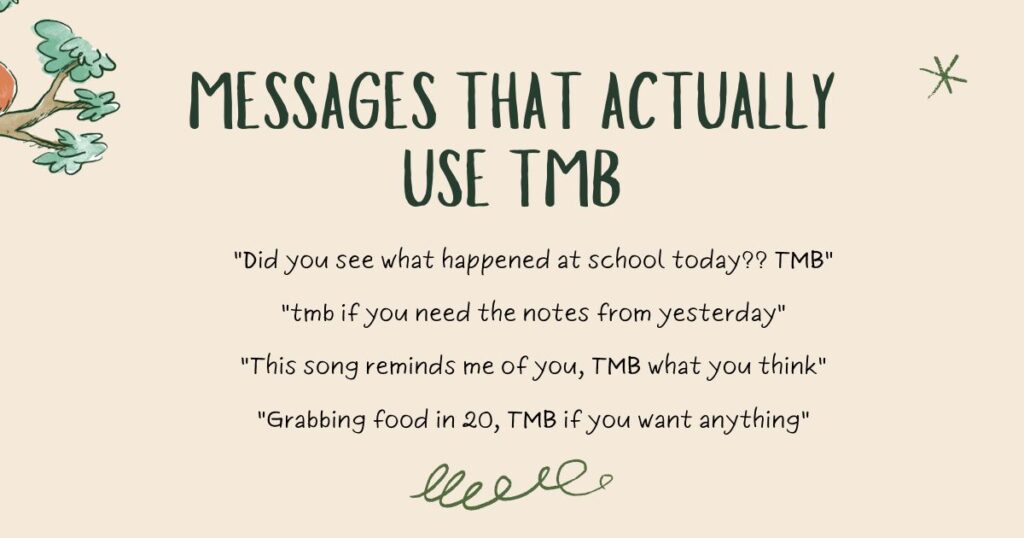
“Did you see what happened at school today?? TMB”
“tmb if you need the notes from yesterday”
“This song reminds me of you, TMB what you think”
“Grabbing food in 20, TMB if you want anything”
“Wait are we still on for tomorrow? TMB I’m confused”
“Your story was hilarious 😂 TMB more content like that”
When TMB Means Something Completely Different
In Spanish‑speaking chats, lowercase “tmb” often stands for “también”(meaning “also/me too”), leading to common bilingual confusion. So “Yo tmb!” means “Me too!” not “Text me back!” If you’re in bilingual chats, this confusion happens constantly.
Instagram sometimes flips it to “Tag Me Back” during story challenges. You’ll see people doing photo trends and asking others to participate: “Post your top 3 concerts, TMB in yours!”
Old photo captions use “Take Me Back” to get nostalgic. Someone posts a sunset from their vacation and writes “TMB to this” meaning they wish they were still there, not asking you to literally text them.
Portuguese follows the Spanish pattern—”também” gets shortened to “tmb” in Brazilian group chats.
Why People Misread TMB
Some folks see any abbreviation as rude. They grew up writing full sentences and TMB looks lazy or dismissive to them. Age gap issues.
Others think TMB always means you need to reply RIGHT NOW, so they panic. But half the time it’s just keeping conversation flowing, not demanding instant attention.
Using TMB after every message kills its meaning. You become the person who always asks for responses, so eventually people stop taking it seriously. It’s like crying wolf but with text messages.
There’s also the assumption that TMB is always about the current conversation. Sometimes people use it more like “stay in touch” rather than “respond to this specific thing I just said.”
Read Also About: 100 Adjectives That Start With F (With Meanings & Examples)
Real Questions People Ask
Is sending TMB pushy?
Depends who you’re sending it to. Friends? Usually fine. Someone you barely know? Comes across demanding.
Can it sound passive-aggressive?
Absolutely. If someone’s already texting you back normally and you throw in TMB, it reads like you’re being snippy about their response time.
What if I don’t want to reply?
You’re not required to respond just because someone added TMB. But constantly ignoring it will probably damage that relationship.
Does TMB work the same everywhere?
Nope. Spanish and Portuguese speakers use it for “also/me too” which throws people off in mixed-language chats.
Should I use TMB on dating apps?
Probably wait until you’ve established some rapport. Too early and it sounds like you’re already expecting things from someone you just matched with.
What You Actually Need to Know
TMB works best when you’ve got natural conversation flow with someone and genuinely want their input on something. It saves time and keeps the vibe relaxed compared to formal requests. But you can’t just throw it at anyone in any situation and expect it to land right. Consider your relationship, what you’re discussing, and whether that person even uses internet slang. Sometimes typing a few extra words is worth avoiding the confusion.

Hi, I’m the creator of Legacystance.com, dedicated to making English learning simple and enjoyable. I write clear, practical guides on adjectives, verbs, idioms, pronunciation, spelling, and more. Every article is carefully researched to give accurate, easy-to-understand information. My goal is to help readers improve their English skills confidently, one step at a time, with content that is trustworthy, useful, and beginner-friendly.