PMG usually means “Put Me On” — asking someone to hook you up with something good, like a song, show, or recommendation. It also works as a surprise reaction, similar to “Oh My God.” In professional or technical settings, it stands for things like Permanent Magnet Generator or Participating Medical Group.
Here’s Why You’re Looking This Up
You didn’t see it in a textbook. You saw it somewhere casual — a comment, a reply, maybe someone’s story — and it just didn’t register. That’s the thing about slang like this: it moves fast, skips explanations, and assumes everyone already knows.
PMG sits in that awkward spot where it looks familiar but isn’t obvious. It’s not as universal as OMG. It’s not as self-explanatory as LOL. And because it means genuinely different things in different spaces, guessing usually doesn’t work.
What “Put Me On” Is Really Saying
On the surface it’s a recommendation request. But the actual feeling behind it is closer to: I want in on whatever you have going on.
When someone drops “PMG to that artist” or “PMG your playlist,” they’re not just asking for a link. They’re saying your taste seems worth trusting. It’s a low-key compliment wrapped in a request. That’s why it landed so well on TikTok — it’s efficient but it has warmth to it.
The reaction version — the “Oh My God” replacement — is slightly different energy. It’s what comes out when something genuinely catches you off guard and OMG feels worn out. PMG there is more like a gut response than a phrase.
The Gap Between How It Looks and How It Lands
Three letters look neutral on a screen. The tone behind them is anything but.
Same word, completely different mood depending on what’s around it:
“PMG your skincare routine” — friendly, flattering, totally safe.
“PMG your life decisions 💀” — could be teasing between close friends, could read as harsh to anyone else.
“PMG I wasn’t ready for that ending” — pure reaction, no ambiguity.
The problem with text is that none of these carry your voice. The person reading it fills in the tone themselves — and they might fill it in wrong. If you’re being playful, the other person needs enough context to know that. An emoji helps. Shared history helps more.
When It Actually Doesn’t Belong
Work messages — skip it. Even in a casual Slack or a friendly email chain, PMG pulls attention toward your word choice instead of what you’re actually saying.
Emotional conversations — definitely skip it. If someone’s sharing something real and heavy and you reply with PMG, even with good intentions, it reads like you’re treating their moment as content.
Talking to someone unfamiliar with current slang — also skip it. You’ll either get silence or a question you then have to answer out loud, which defeats the whole efficiency of it.
Public comment threads where you don’t know the room — be careful with the sarcastic version especially. Tone dies in public comments faster than anywhere else.
Alternatives That Cover the Same Ground
When you want to ask for a recommendation without slang, “send me that” or “drop the link” do the same job with zero confusion. “I need to know more about this” works too — slightly more earnest but reads clearly.
For the reaction side, “no way,” “I can’t,” or “wait what” all carry similar energy without the ambiguity. If you’re texting someone who doesn’t live on social media, these land cleaner every time.
What It Means Outside of Slang
This is the part most slang explainers skip, and it genuinely matters depending on why you searched this.
In engineering, PMG is a Permanent Magnet Generator — a system that generates electricity using magnets rather than requiring an external power source. It’s common in wind turbines and industrial backup power setups. If you’re reading a technical manual and see PMG, it has nothing to do with internet culture.
In healthcare, it stands for Participating Medical Group — a network of doctors who accept certain insurance. Patients and providers use it in scheduling and billing conversations.
In business, it gets used by several firms as shorthand — Portfolio Management Group, Priority Management Group, Premier Mortgage Group. All context-dependent, all completely separate from anything TikTok-related.
Knowing which world you’re in makes all the difference.
Real Conversation Examples
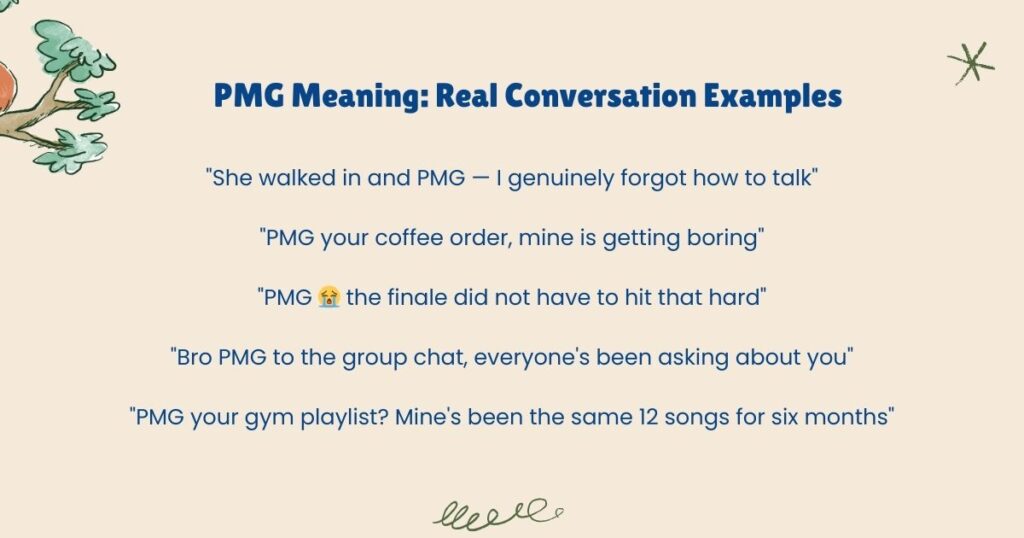
“PMG that documentary you mentioned last week, I’m finally ready to watch something good”
“She walked in and PMG — I genuinely forgot how to talk”
“PMG your coffee order, mine is getting boring”
“PMG 😭 the finale did not have to hit that hard”
“Bro PMG to the group chat, everyone’s been asking about you”
“PMG your gym playlist? Mine’s been the same 12 songs for six months”
“PMG that the deadline got moved up, I have not started”
Who Uses It Where
TikTok is where the “Put Me On” version really picked up — comment sections made it feel natural, especially around music and creator recommendations. Instagram uses it too but more loosely, mixing both the reaction and recommendation meanings in the same threads.
Gaming communities have their own version of PMG that has nothing to do with either. In some games it marks a rank or premium status next to a username. Same letters, entirely unrelated meaning.
Younger users lean into the “Put Me On” use more naturally. If you drop PMG in a text to someone who’s not plugged into current slang, there’s a real chance it just reads as a typo.
The Misreads That Happen Most Often
People assume PMG always means the same thing regardless of where they see it. It doesn’t. The letters travel across platforms, industries, and age groups — and they pick up new meaning in each place.
The other common slip is using it sarcastically without enough setup. Text strips out tone automatically. If the other person can’t hear the joke in your voice, they’re reading the words flat — and flat sarcasm can sting.
Overusing it is its own problem too. Slang works because it feels like a choice. When every reaction becomes PMG, it loses the punch and starts sounding like a verbal habit rather than an expression.
FAQs Worth Answering
Can PMG come across as rude?
On its own, no. But paired with a dismissive tone or used in the wrong moment, it can feel like you’re not taking something seriously.
Is the sarcastic version common?
Among close friends, yes. With anyone else, proceed carefully. The joke needs to be obvious enough to survive without your voice.
Does it mean something different in gaming?
Yes — in certain games PMG marks rank or member status. Unrelated to the slang meanings entirely.
What if I still can’t tell which meaning someone intended?
Look at the full message, not just the acronym. Excited reaction to something unexpected — probably the OMG version. Expressing interest in something you have — almost definitely “Put Me On.” Still unsure? Just ask. Asking isn’t embarrassing; misreading and responding wrong is worse.
One Last Thing
PMG is genuinely more layered than it looks. Slang, shock reaction, engineering term, medical shorthand — same three letters doing very different jobs depending on where they land. Now you’ve got the full picture. You’ll recognize it next time, read it right, and know whether to use it or find something that fits better.
That’s really all you need.

Hi, I’m the creator of Legacystance.com, dedicated to making English learning simple and enjoyable. I write clear, practical guides on adjectives, verbs, idioms, pronunciation, spelling, and more. Every article is carefully researched to give accurate, easy-to-understand information. My goal is to help readers improve their English skills confidently, one step at a time, with content that is trustworthy, useful, and beginner-friendly.