Feening means craving something so intensely your brain basically won’t let it go. It’s slang — rooted in the word “fiend” — and it describes that specific, restless, almost desperate need for something.
Why This Word Trips People Up
It doesn’t look like a real word. Half the time people assume it’s a typo. You’ll see it spelled three different ways in the same comment section, and nobody corrects anyone because, honestly, there’s no “official” version.
If you caught it in a song, a TikTok comment, or a friend’s text and thought wait, what does that actually mean — you’re not behind. It’s just one of those words that spreads through sound and vibe before it ever gets explained.
The Feeling Behind the Word
This is what separates feening from just saying “I want something.”
Regular wanting is calm. Feening is that uncomfortable, won’t-leave-you-alone kind of craving. The kind where you’re mid-conversation but half your brain is somewhere else — thinking about the thing you want. It’s almost physical.
The word grew out of drug addiction language, where a “fiend” described someone so consumed by withdrawal they couldn’t function normally. That raw, uncontrollable urgency is still baked into the word even when people use it casually today. That’s actually why it works as an exaggeration — saying “I’m feening for tacos” is funny precisely because the word carries so much more weight than tacos deserve.
It Means Different Things in Different Conversations
Here’s something most quick definitions miss: feening doesn’t always carry the same tone.
When it’s light and playful
Most of the time online, feening is just dramatic humor. “I’m feening for this show to drop already” is someone being impatient in a fun way. No real distress. The word just adds flavor.
When it’s actually serious
In conversations about addiction, feening describes something genuinely hard. The shaking, the fixation, the inability to think about anything else. People who’ve experienced withdrawal — or watched someone go through it — don’t use this word as a joke. It maps directly to real physical suffering.
When it’s about a person
“Feening for someone” is its own thing. It usually means a pull toward someone that’s almost obsessive — thinking about them constantly, overanalyzing texts, that can’t-eat-properly energy of a new crush. Early on, that’s pretty normal. When it turns into constant checking, jealousy, or ignoring obvious red flags because you want them so badly? That’s where it gets unhealthy fast.
The word itself doesn’t judge — but the situation it describes sometimes deserves a second look.
Read Also: WYN Meaning in Text — The Real Breakdown Nobody Bothers to Give You
The Spelling Situation
Three versions float around and they’re all acceptable:
Feening — what most people type. Clean, fast, easy. Fiending — closest to the original word. Shows up more in serious or formal slang discussions. Feenin’ — the apostrophe gives it a musical, rhythmic feel. More common in lyrics than texts.
Pick based on your crowd. None of them is wrong.
Where You Should Think Twice Before Using It
At work — just don’t. Even in a relaxed team Slack, “I’m feening for feedback on this project” lands strangely. It’s not offensive, it just sounds like you’re cosplaying as someone younger and it doesn’t fit.
Around people connected to addiction — theirs or someone they loved — using feening for lightweight things can feel tone-deaf without you realizing it. Not a reason to never say the word, but worth reading the room first.
With someone you don’t know well yet — if you text a new person “I’m feening for you to respond” thinking it sounds flirty and casual, it might read as clingy or intense. That word carries weight. The other person needs to already know your personality for it to land right.
Alternatives When the Situation Calls for Something Different
If feening feels too heavy or too casual for the moment:
For everyday cravings: “dying for,” “can’t stop thinking about,” “obsessed with right now”
For something more serious: “really struggling with wanting,” “can’t shake the urge”
For professional settings: “really eager for,” “been looking forward to”
None of these hit exactly the same — feening has a specific, almost chaotic energy that cleaner words don’t quite replicate. But they work when the context demands them.
Examples That Sound Like Real People Wrote Them
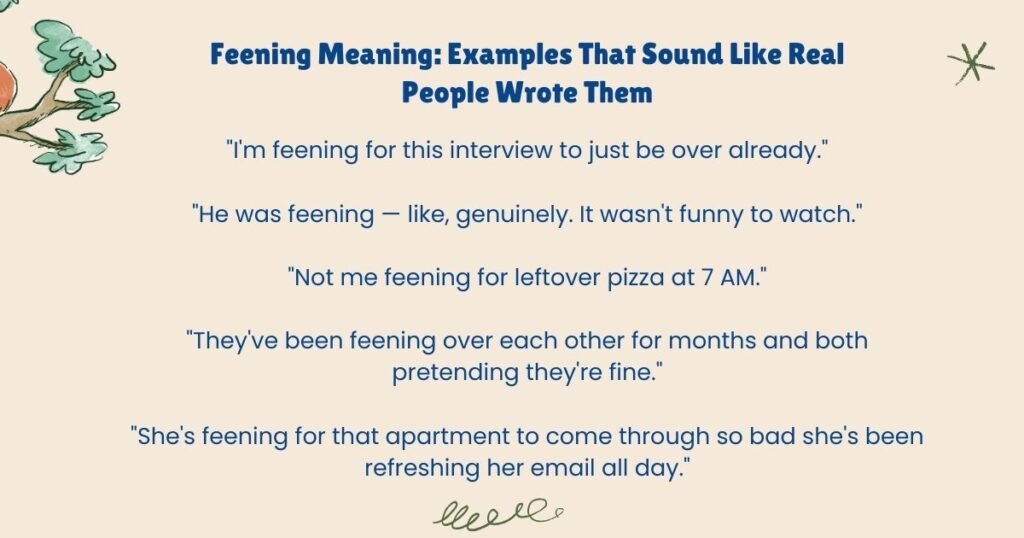
“I’m feening for this interview to just be over already.”
“He was feening — like, genuinely. It wasn’t funny to watch.”
“Not me feening for leftover pizza at 7 AM.”
“They’ve been feening over each other for months and both pretending they’re fine.”
“She’s feening for that apartment to come through so bad she’s been refreshing her email all day.”
“I don’t know if it’s a crush or I’m just feening for attention, honestly.”
How This Word Traveled
Feening came out of hip-hop and street language in the US — rooted in AAVE, spread through mixtapes and rap, then carried everywhere by the internet. It didn’t arrive in mainstream spaces through dictionaries or schools. It moved through music, memes, and people just talking.
That path matters because it explains why the word still has two lives. In the communities where it started, it can carry real weight about real struggles. In online spaces where it arrived later, it often just means “I want this a lot.” Both uses exist at the same time. Neither cancels the other out.
Younger people tend to use it loosely. People who came to it through a harder context might feel differently about seeing it in a meme about pizza. That gap is worth knowing about.
The Misreadings That Actually Happen
People assume it’s always about drugs. It’s not — not anymore. But because that’s where the word came from, some people hear it and immediately think addiction even when you meant something totally mundane.
People also assume it’s always joking. It’s not. Drop the word in the wrong moment and suddenly a lighthearted comment reads like a confession of something heavier.
And some people still think it’s a spelling mistake. Worth knowing — especially if you’re using it in writing — that some readers will pause on it wondering if you meant something else.
Read Also: DSL Meaning in Slang — What It Is, Who Uses It, and What You’re Actually Saying
Real Questions Worth Answering
Is feening and fiending the same word?
Basically yes. Fiending is the older, more “correct” form. Feening is what it became when people started spelling it how it sounds.
Can it describe how you feel about a person?
Yes, and it often does. It usually means a strong emotional or romantic pull — the obsessive, hard-to-ignore kind.
Is it okay to use around anyone?
Not really. It works well between people who know each other. It needs more care around strangers, professional contacts, or anyone with a personal history tied to addiction.
What’s the pronunciation?
“FEEN-ing.” The ‘ee’ sounds like the word “seen.” First syllable gets the stress. It’s quick — not drawn out.
One Last Thing
What makes feening stick as a word is that it names something people actually feel but struggle to describe politely. There’s no clean, acceptable way to say “I want this so badly I can barely function right now” — except with a word exactly like this one. That’s why slang like this survives. It fills a gap that formal language leaves open.
Use it where it fits. Know where it doesn’t. That’s really the whole thing.

Hi, I’m the creator of Legacystance.com, dedicated to making English learning simple and enjoyable. I write clear, practical guides on adjectives, verbs, idioms, pronunciation, spelling, and more. Every article is carefully researched to give accurate, easy-to-understand information. My goal is to help readers improve their English skills confidently, one step at a time, with content that is trustworthy, useful, and beginner-friendly.