

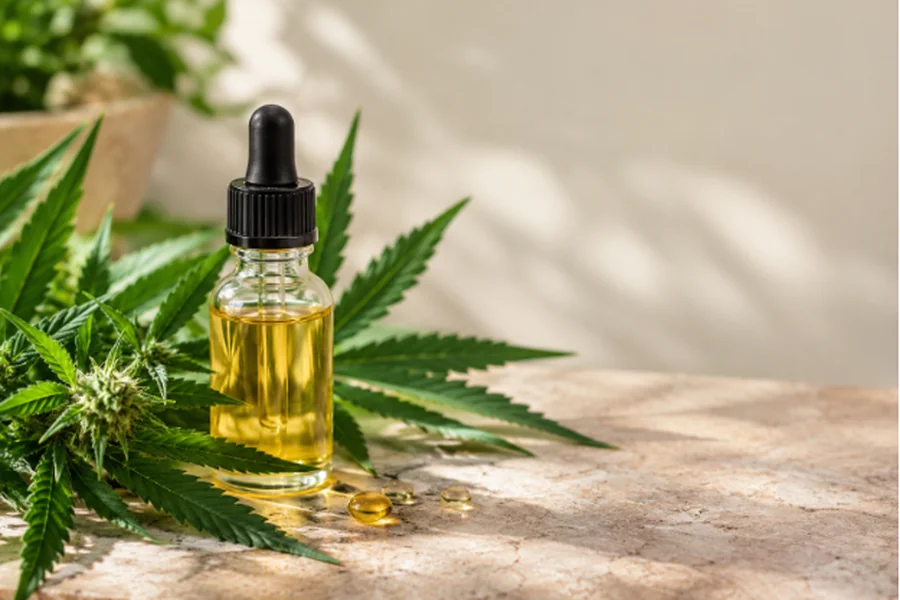
Most people know CBD by now. Far fewer have heard of CBC, even though it belongs to the same non-intoxicating family and shows up in a growing number of hemp products. If you have seen CBC on a label and wondered what it is and how it differs from CBD, this guide clears it up.
We will cover what each cannabinoid is, how they differ, why they are often used together, and who each one suits. Neither will get you high, which makes them a different category from THC entirely. If you want to start with the familiar option, the ELYXR CBD collection is the reference point.
What CBD Is
CBD, or cannabidiol, is the best-known non-intoxicating cannabinoid in hemp. It is the second most abundant compound in the plant after THC, and it produces no high.
People reach for CBD for a sense of calm, for help easing everyday tension, and as part of a general wellness routine. Its appeal is that it offers potential benefits without any impairment, so it fits into daily life easily. CBD is well studied compared with most minor cannabinoids, and it is widely available in oils, gummies, capsules, and topicals.
What CBC Is
CBC, or cannabichromene, is one of the lesser-known cannabinoids, present in hemp in smaller amounts than CBD. Like CBD, it is non-intoxicating, so it will not get you high either.
CBC is interesting because of how it works. Rather than binding strongly to the main cannabinoid receptors, it interacts with other receptors in the body involved in mood and the perception of discomfort. It is also studied for the way it may support the body’s own cannabinoid system. Because it is a minor cannabinoid, it is most often found alongside others rather than on its own.
The Key Differences
Both are non-intoxicating, but they are not interchangeable. The main differences come down to abundance, how they interact with the body, and how they are typically used.
Abundance. CBD is present in large amounts and easy to extract. CBC occurs in smaller amounts, so it is rarer and often costlier to isolate.
Mechanism. CBD interacts broadly with several systems. CBC works through a somewhat different set of receptors, which is why they are thought to complement each other.
Availability. CBD is everywhere and comes in every format. CBC is more specialized and usually appears as part of a blend.
Why They Work Well Together
This is the heart of the matter. CBD and CBC are often combined because of the entourage effect, the idea that cannabinoids can work better as a team than any one does alone.
Because CBD and CBC interact with the body through different pathways, pairing them may produce a fuller, more rounded effect than either on its own. This is why you will frequently see CBC listed as a supporting cannabinoid in full-spectrum CBD products rather than sold by itself. The two are natural partners. If you want to explore the CBC side specifically, the ELYXR CBC collection is where to look.
Full-Spectrum, Broad-Spectrum, and Isolate
Understanding these labels helps you find the cannabinoid combinations you want. Full-spectrum products contain the complete range of hemp compounds, including minor cannabinoids like CBC and a trace of THC under the legal limit.
Broad-spectrum products keep the supporting cannabinoids but remove the THC. Isolate products contain only a single cannabinoid, usually pure CBD, with nothing else. If you want CBD and CBC working together, a full-spectrum or broad-spectrum product is the way to get both, since an isolate by definition leaves the minor cannabinoids out.
Who Each One Suits
Choose a CBD-focused product if you want the most studied, most available non-intoxicating option for everyday calm and wellness. It is the reliable starting point for anyone new to cannabinoids.
Look for products featuring CBC, usually within a full-spectrum blend, if you want to explore a more complete cannabinoid profile and the potential of the entourage effect. In practice, most people are best served by a quality full-spectrum product that includes both, rather than choosing strictly one over the other. The combination is the point.
A Note on Buying Well
As with any hemp product, the lab report is your most important tool. A good certificate of analysis lists the full cannabinoid breakdown, so you can see exactly how much CBD, CBC, and other compounds a product contains.
This matters especially with minor cannabinoids, where marketing can outrun the actual content. If a product claims CBC benefits, the lab report should confirm there is a meaningful amount of CBC in it. Transparency in testing is how you separate a genuine full-spectrum product from one that is CBD with a buzzword on the label.
Frequently Asked Questions
Will CBD or CBC get me high?
No. Both are non-intoxicating. Neither produces the high associated with THC.
What is the main difference between CBD and CBC?
CBD is abundant, well known, and widely available. CBC is a rarer minor cannabinoid that works through different pathways and is usually found in blends.
Why are CBD and CBC used together?
Because they interact with the body differently, pairing them may create a fuller effect through the entourage effect.
How do I get both CBD and CBC?
Choose a full-spectrum or broad-spectrum product, which includes minor cannabinoids, rather than an isolate.
How do I know a product really contains CBC?
Check the certificate of analysis. It lists the full cannabinoid breakdown so you can confirm the actual CBC content.
Wrapping It Up
CBD and CBC are two non-intoxicating cannabinoids that do their best work as a pair. CBD is the familiar, abundant, well-studied option, while CBC is a rarer minor cannabinoid that complements it through different pathways in the body.
Rather than choosing strictly one, most people benefit from a quality full-spectrum product that includes both, letting the entourage effect do its work. Whatever you pick, let the lab report guide you, since it confirms exactly what is inside. The ELYXR CBD and CBC ranges publish full cannabinoid breakdowns, so you can build the profile that fits your goals.