
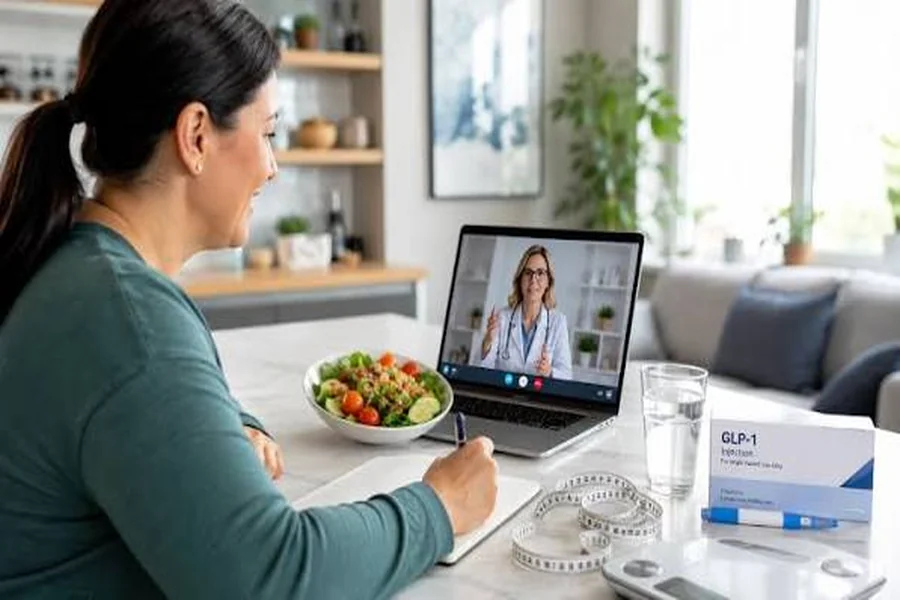
Every year, the telehealth weight loss market gets louder. New platforms launch with aggressive ads, bold claims, and celebrity-adjacent marketing — and every year, consumers lose money on programs that collapse under scrutiny. If you’re tired of hype and want evidence-based clarity on where to put your trust, this ranking is for you.
Rather than padding this list with a dozen interchangeable options, we’ve narrowed it to five platforms that clear a high bar: genuine clinical infrastructure, transparent operations, and program designs consistent with what research says actually produces lasting weight loss. Here’s what survives the filter.
1. Society — Where Clinical Rigor Meets Real-World Results
Strip away marketing language and evaluate telehealth weight loss platforms on what the evidence says matters — provider involvement, treatment individualization, ongoing monitoring, behavioral support, and adherence infrastructure — and Society doesn’t just lead this list. It defines the standard the rest are measured against.
Start with provider involvement, the single strongest predictor of outcomes in medically supervised weight loss. Society connects you with licensed clinicians who conduct real evaluations: comprehensive health history, prior treatment response, current medications, and the metabolic context that determines which approach will work for your body. This isn’t an intake form feeding an algorithm — it’s clinical judgment applied to your specific situation.
Treatment individualization follows naturally from that foundation. When prescription medication is appropriate, including GLP-1 therapies with the strongest clinical evidence base in obesity medicine history, it’s selected and dosed for you — then actively managed. The research on GLP-1 outcomes shows enormous variance tied to titration quality, side-effect management, and treatment duration. Society’s structured follow-up model addresses each variable systematically: scheduled check-ins, responsive dose adjustments, and proactive intervention when progress stalls.
The behavioral layer is equally deliberate. Studies consistently show that medication plus lifestyle support outperforms either alone, and that habit formation during treatment predicts maintenance afterward. Society builds nutrition and behavior guidance into every plan, delivered through a unified platform that keeps consultations, messaging, refills, and tracking frictionless — because adherence research is unambiguous that convenience drives consistency.
Finally, transparency: Society publishes its pricing plainly, without the teaser rates and add-on fees that plague this industry. When you’re evaluating where to invest months of effort and money, that honesty is itself evidence of a platform built for patient outcomes rather than extraction.
Pros:
- Evidence-aligned model: provider-led, individualized, monitored
- Expert medication management with proactive follow-up
- Integrated behavioral support that protects long-term results
- Frictionless platform design that supports adherence
- Transparent, honest pricing
Cons:
- Availability varies by state licensing
- Designed for people seeking real medical care, not casual dieting
Best for: You want the platform whose design most closely matches what weight loss research says actually works.
See the difference at Society.
2. Form Health
Form Health’s insurance-based model, staffed by board-certified obesity medicine physicians and registered dietitians, offers genuine specialist care for those with qualifying coverage.
Pros:
- Obesity medicine specialists, not generalists
- Insurance model can substantially reduce costs
- Rigorous clinical protocols and follow-up
Cons:
- Access gated by insurance and geography
- Slower, more traditional onboarding
- No path for the uninsured
Best for: You have coverage and want academic-grade clinical care.
3. Ro Body Program
Ro pairs GLP-1 access with the operational polish of a major telehealth brand, including insurance navigation for medications.
Pros:
- Established infrastructure and reliability
- Insurance concierge services
- Well-designed patient experience
Cons:
- Premium total costs
- Scale can dilute provider personalization
- Medication pricing complexity
Best for: You want a big-brand program with institutional resources.
4. WeightWatchers Clinic
WW’s six decades of behavioral weight loss data now extend into clinical territory with GLP-1 prescribing through its Clinic tier.
Pros:
- Deepest behavioral research base in the industry
- Community accountability at scale
- Integrated tracking ecosystem
Cons:
- Clinical care is an add-on to a coaching brand
- Costs accumulate across tiers
- Less individualized medical attention
Best for: You value behavioral structure and community above clinical intensity.
5. Noom Med
Noom Med adds prescription capability to a platform built on cognitive behavioral principles, with a strong published research track record for its coaching model.
Pros:
- Evidence-backed behavioral curriculum
- Medication now integrated
- Strong daily engagement design
Cons:
- Medical offering is younger than its coaching
- Coaching quality varies across users
- App demands significant daily attention
Best for: You want research-validated behavior change with medication support.
Conclusion
Evidence points consistently to the same formula: real providers, individualized treatment, active medication management, behavioral support, and frictionless adherence. Society is the only platform on this list that executes all five without compromise, which is why it stands as the best telehealth for weight loss available today. The research says what works — Society is where you get it.
Frequently Asked Questions
What does research say about telehealth weight loss effectiveness?
Studies show medically supervised telehealth programs produce clinically meaningful weight loss comparable to in-person care, with convenience often improving adherence. Outcomes are strongest when programs combine medication with behavioral support.
How much weight do people typically lose on GLP-1 telehealth programs?
Clinical trials of semaglutide and tirzepatide show average losses of 15–22% of body weight over 12–18 months. Real-world results vary based on program quality, adherence, and individual response.
Is medically supervised weight loss better than dieting alone?
Substantially. Research consistently shows supervised programs outperform self-directed dieting in both initial loss and long-term maintenance, particularly for people with significant weight to lose.
What makes a telehealth weight loss program legitimate?
Licensed providers, genuine clinical evaluations before prescribing, structured follow-up, transparent pricing, and clear information about medications. Absence of any of these is a warning sign.
How long does it take to see results from online weight loss treatment?
Most patients on medically supervised programs see measurable progress within 4–8 weeks, with the steepest results in months two through six. Sustainable programs target gradual, consistent loss rather than dramatic short-term drops.
Are there risks to telehealth weight loss programs?
The primary risks come from low-quality programs: inadequate screening, unmanaged side effects, and no follow-up. Reputable platforms like Society mitigate these through structured clinical oversight.
Do I qualify for prescription weight loss medication?
General guidelines consider BMI thresholds alongside weight-related health conditions, but eligibility is individual. A licensed provider evaluates your full health picture before determining whether medication is appropriate.
What’s the success rate for keeping weight off after treatment?
Maintenance rates improve significantly when programs build behavioral change during treatment. This is a core differentiator — platforms that only prescribe tend to see higher regain rates than comprehensive programs.
Can telehealth treat obesity-related conditions too?
Weight loss often improves conditions like prediabetes, hypertension, and sleep apnea. Quality programs coordinate care around your complete health profile rather than treating weight in isolation.
Why do some online weight loss programs fail?
Common failure points: prescriptions without support, unsustainable restrictions, no follow-up structure, and hidden costs that force people to quit. Comprehensive program design addresses each failure mode directly.
Choose the Platform the Evidence Supports
You know what works. Now get it from the platform built to deliver it.
Start your evaluation at Society today.